The Center for Shared AI Prosperity launched in response to clear public frustration with the lack of robust policy solutions to the challenges of AI in a world where most Americans already know the deck is stacked against them.
I became a CSAIP advisor because Americans seem so far ahead of the political system at this moment of technological change: they are demanding real civic imagination from leaders and policymakers. Americans have a long history of fighting for economic rights, social citizenship, and just entitlements. Together we created highly flawed yet remarkable government programs from Social Security to Obamacare, tax-and-spend programs that can create a temporary sense of security.
Still, I was most suspicious that Americans were genuinely open to new taxes to make these visions real. Would we be able to think about taxation differently in light of AI? The past decades of fights over the tax code have been downright depressing. I have been worrying at night about the feasibility of any effort to expand the necessary taxation to support the best parts of the welfare state. Just last summer, Congress locked in $3.8 trillion in extended tax cuts — and then turned around and used the resulting deficit as justification to cut Medicaid and food stamps.
So one of the first CSAIP polls pressure tests a core idea: Does AI create a genuine window of opportunity to organize around new taxation to support plans that address job market disruption?
The initial answer is strong yes, but with some caveats.
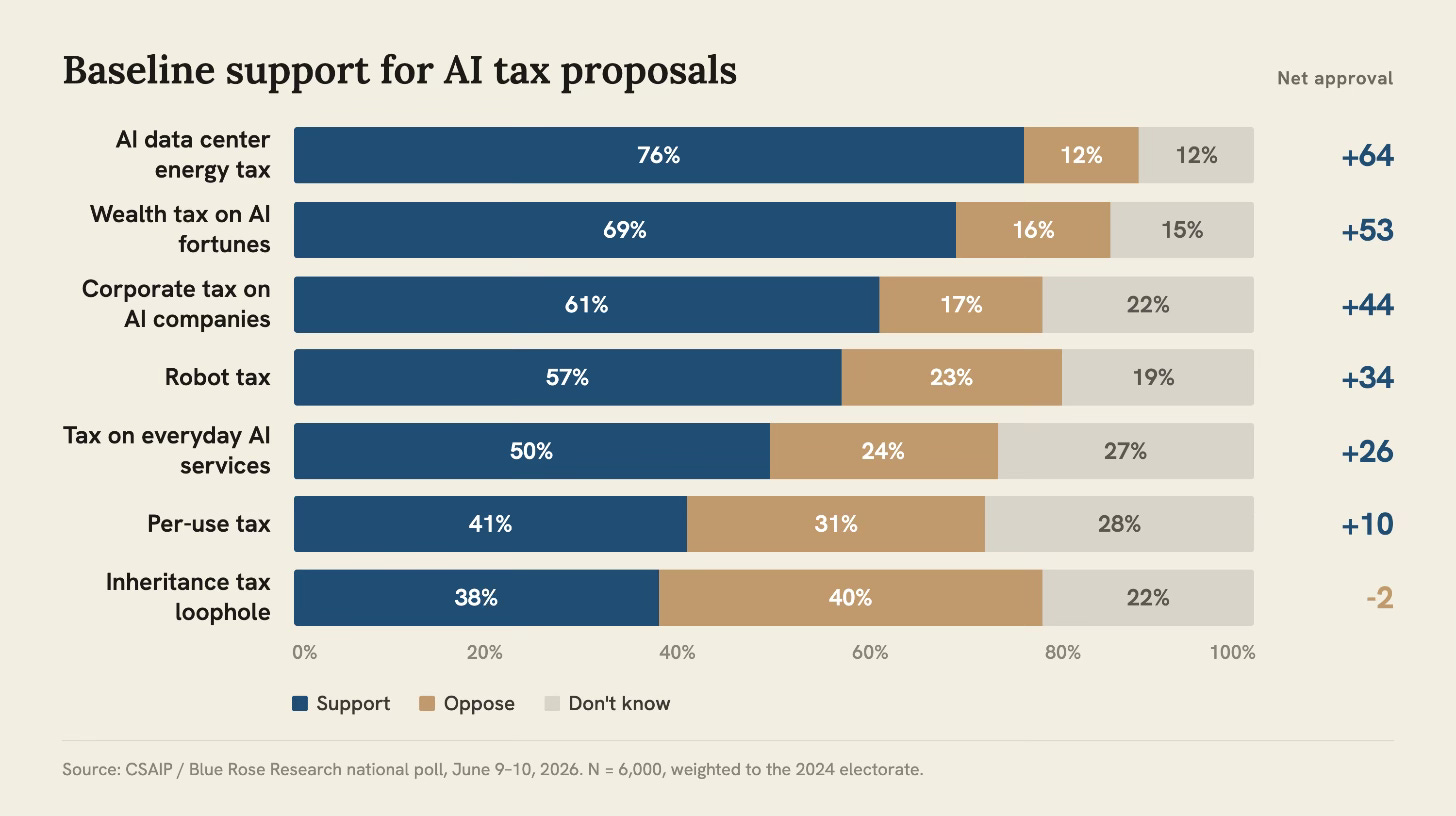
At baseline, support for AI-related taxes is robust. An energy tax on AI data centers gets overwhelming endorsement, with 76% of Americans in favor, resulting in a +64 percentage point net margin of support. A wealth tax on AI fortunes above $50M comes in at +53. A higher corporate tax rate on AI companies sits at +44. These are not subtle findings. Taxes are just not a hard sell. People want a fairer economy.
I was intrigued to see how specific AI-related taxes seem to be quite popular. Where Americans are already frustrated (especially around data centers) there is genuine enthusiasm for new taxes targeting the people and companies at the cutting edge of AI. A lot more research is needed to know how much we should extrapolate from the poor performance of the inheritance tax loophole.
Figure 1. Net support margin (support minus oppose) at baseline1
The caution: moveable opinion and many undecided on policy
Our partners at public opinion research firm Blue Rose Research have developed a thoughtful approach to measuring attitudes, which CSAIP will use often. Polling questions measure both a baseline support for a policy with a basic description, and then measure support for a policy after an interviewee has read strong arguments for and against any given proposal. This approach gauges if the opinions expressed are deeply felt, or weakly held and likely to crumble in the face of opposition.
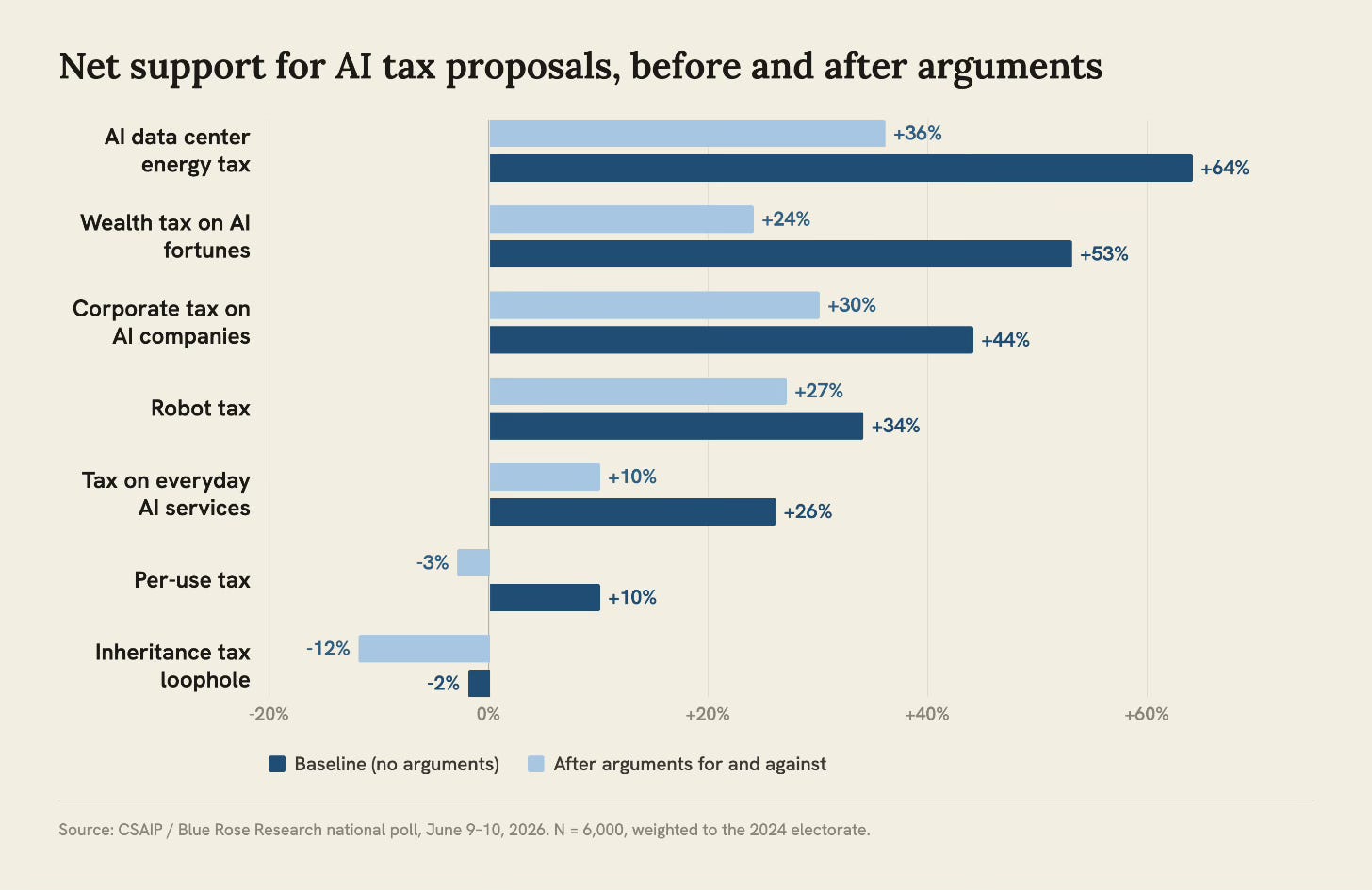
When voters are exposed to generic pro-and-con argumentation for and against a policy, support drops on most proposals, sometimes substantially. Support for an AI data center energy tax falls from +64 to +36, and support for a wealth tax on AI fortunes drops from +53 to +24. Similarly, on nearly every proposal, roughly a quarter of respondents said they didn’t know. That uncertainty is consequential.
These realities are not shocking for nascent policy debates, and it is not necessarily bad news for tax enthusiasts. Americans are still forming their opinions, and taxes are not poison pills. In fact, support for new AI taxes is starting off from a point of strength. Still, proponents cannot assume that such strong baseline support for any new taxes will hold once opponents mount a campaign.
Figure 2. Net support margin at baseline and after generic pro-and-con argumentation2
AI-specific taxes versus broad tax reform: A generational fault line worth watching
There are two buckets of taxes that policymakers could advance in a world disrupted by AI deployment: AI-specific taxes (aimed at addressing the expected accumulation of wealth among the people and corporations that will profit from AI) and more general taxes (aimed at broadly capturing more of the wealth held by the largest corporations and the super-wealthy). There is an early policy debate occurring regarding which bucket of taxes make the most sense when it comes to raising revenue to address AI-driven job loss. CSAIP started by testing a number of AI-related taxes.
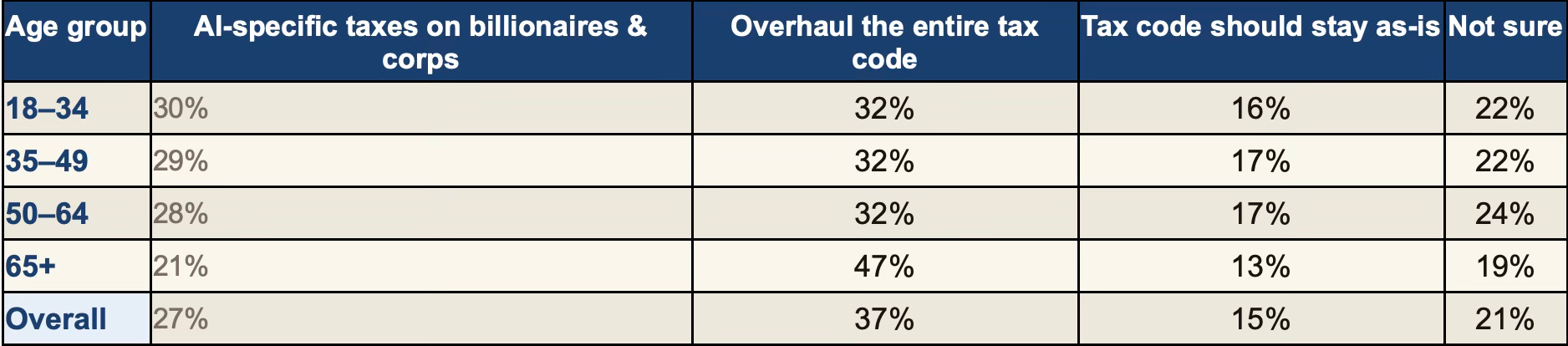
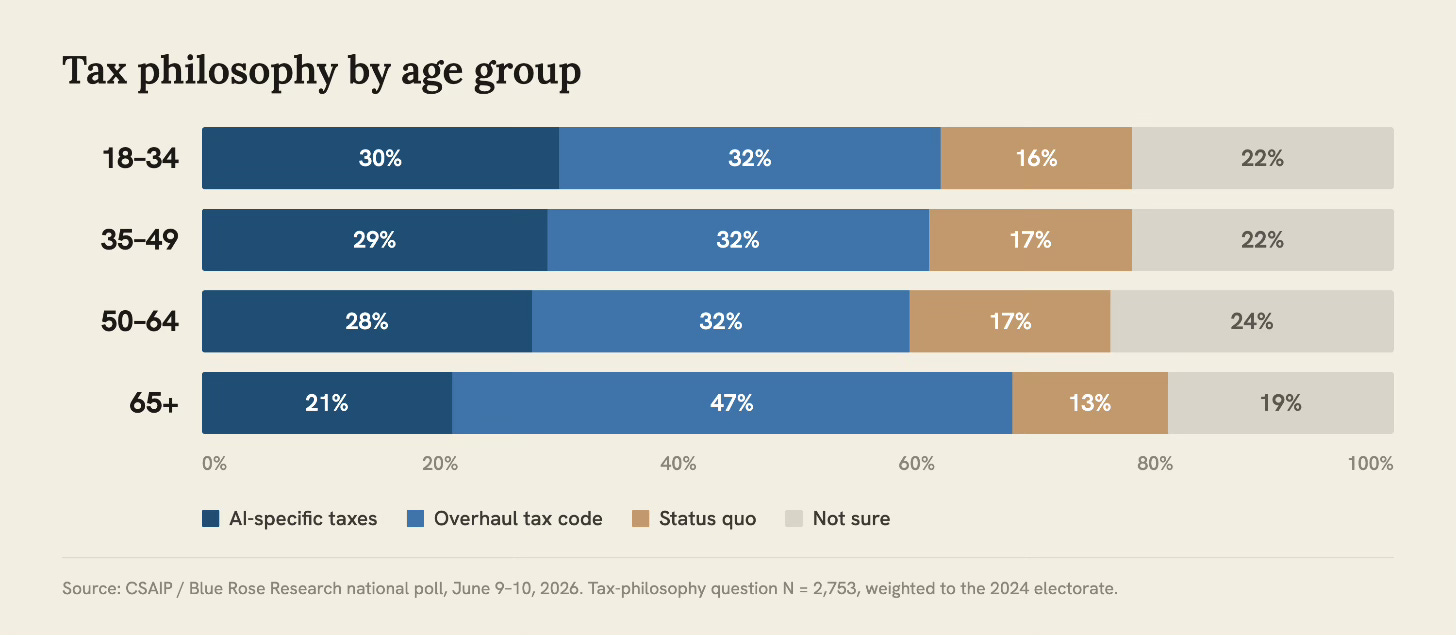
Beneath the aggregate support numbers, the data reveals a generational divide. All age groups agree that something needs to change, but start to diverge on what. When asked which tax philosophy best reflects their view, younger voters (18–34) are nearly as likely to favor targeted, AI-specific taxes (30%) as broad tax reform (32%), while older voters (65+) tilt heavily toward broad reform (47%) and are least likely to support AI-specific taxes (21%). Most importantly, the “status quo” camp is small across all ages.
Figure 3. Tax philosophy by age group — "When it comes to taxes and Artificial Intelligence (AI), which of the following comes closest to your view?"3
Younger Americans are clearly worried about a starved state. They are seeing AI wealth expand rapidly. Their openness to AI-specific taxes may reflect greater direct familiarity with the AI capabilities and the companies building it. For them, the question may not be whether the wealthy should pay more in general, but whether AI specifically has created a new kind of wealth that warrants its own form of responsibility to reinvest in society.
A window of opportunity
These results confirm that AI taxation is not a fringe position. It is where public opinion is already pointing. But “already pointing” is not the same as “already arrived.” I am excited to get into the nitty gritty of these policies and combine public opinion research with economic policy research to craft a new vision for progressive taxation in a world drastically changed by AI.
The first step of that work will come as a wide range of folks respond to the CSAIP RFI. We are hoping economists, policymakers, historians, and other creative thinkers will submit ideas for addressing key questions like: How would a token tax actually work? Is a value-added tax (VAT) possible in the United States? How would the IRS administer a robot tax? What would the impact of AI-specific taxes be on the development of AI in the United States and around the world?
The data center energy tax may be the most potent near-term entry point: highest baseline support, a concrete and visible target, easily tied to utility costs voters already feel. The token tax is getting more and more momentum. The robot tax (which would force companies using advanced AI to pay Social Security and Medicare taxes on the expense, the same way they would on a worker) sees its support fall the least after argument. It may be the most durable idea under pressure, grounded in Social Security and Medicare protections that voters across generations trust. But does the economics of a robot tax make just as much sense as the rhetoric of a robot tax? That’s exactly the type of issue CSAIP wants to explore.
The larger opportunity is not any single proposal; it is the chance to shape the terms of a debate that is still being written. CSAIP is committed to tracking this as it evolves, and to making research public. Join us by submitting your ideas.
Subscribe below to receive CSAIP research directly in your inbox.
Figure 1 — Baseline Policy Support (AI tax proposals: support and opposition (N = 6,000)
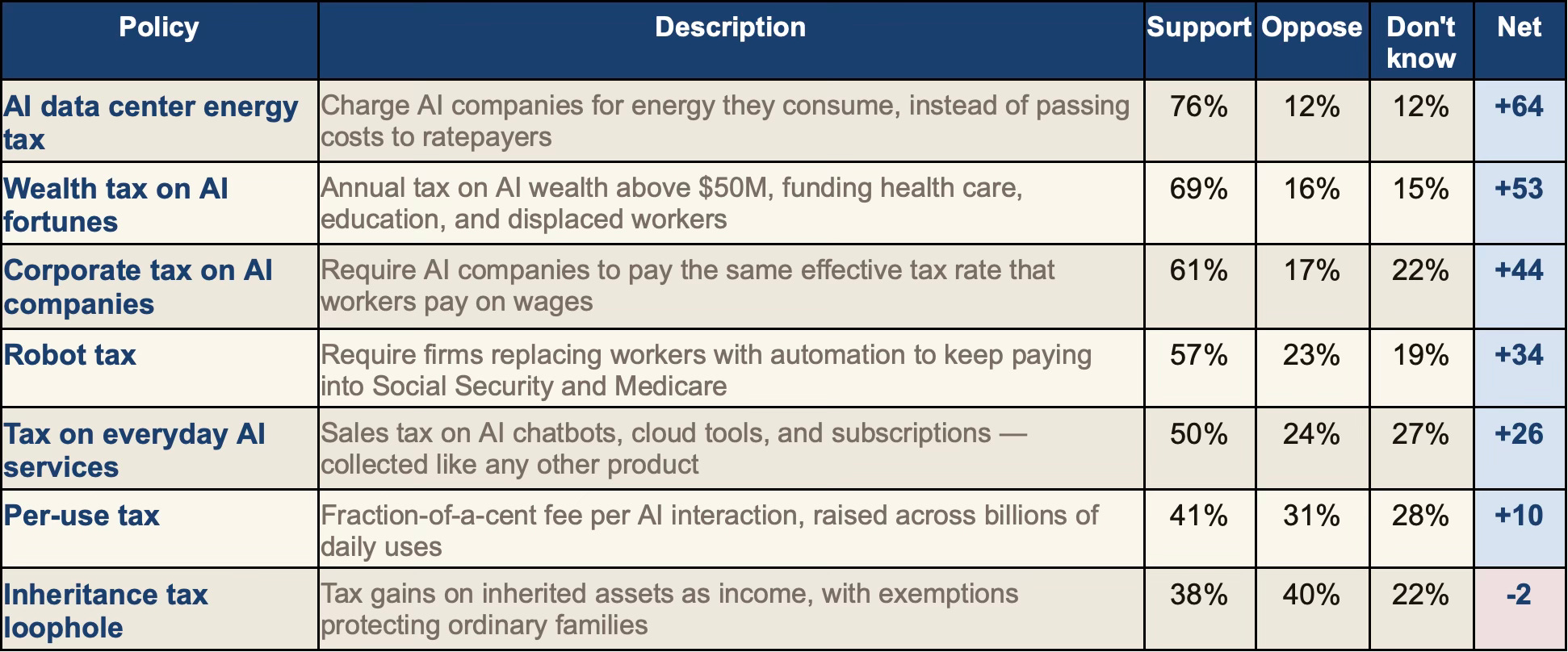
Figure 2 — Policy Support After Pro and Con Argumentation (AI tax proposals: support and opposition (N = 6,000). Same proposals after respondents read generic arguments for and against each policy.)
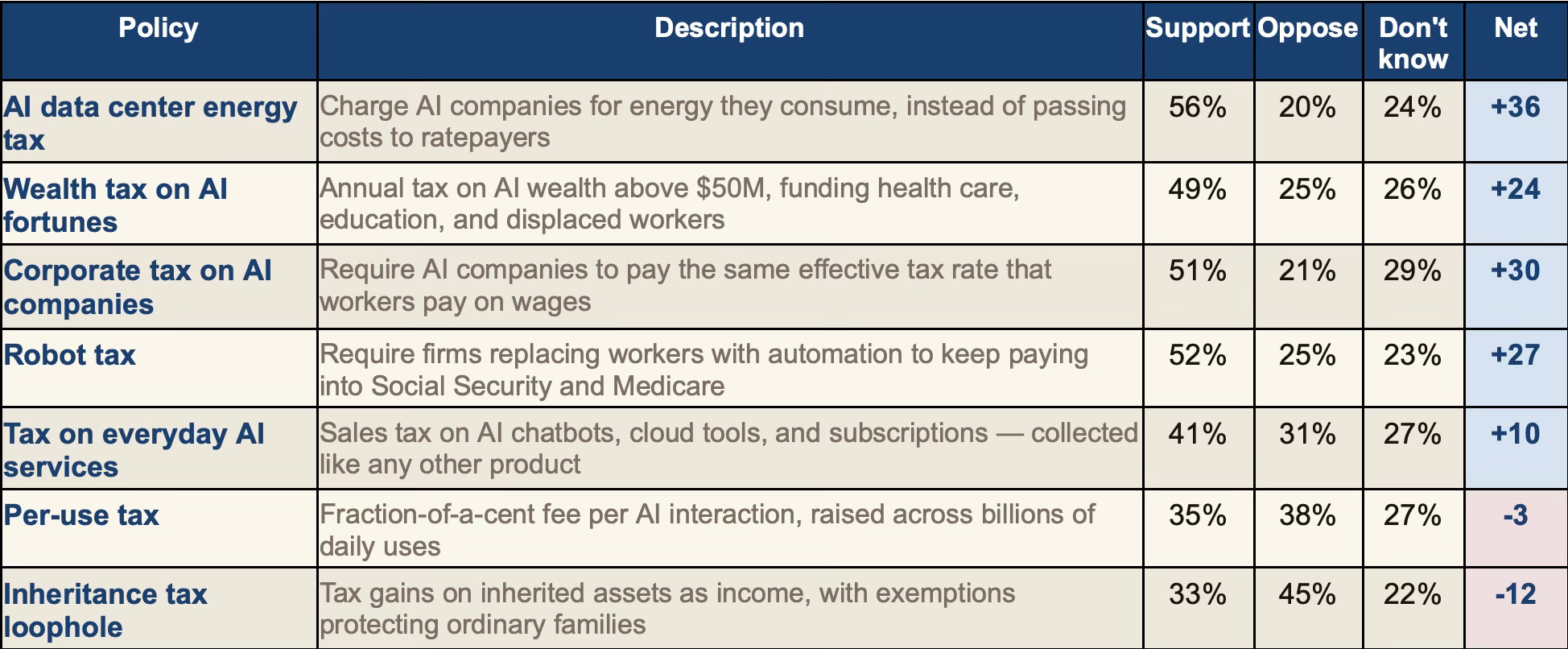
Figure 3 — Tax Philosophy by Age Group (N = 2,753)
“When it comes to taxes and Artificial Intelligence (AI), which of the following comes closest to your view?”
AI is creating so much new wealth that it needs its own targeted taxes on AI billionaires and AI corporations.
AI doesn’t change the underlying problem — we should overhaul the entire tax code so everyone pays their fair share.
AI is just another industry and the tax code should stay as it is.
Not sure