

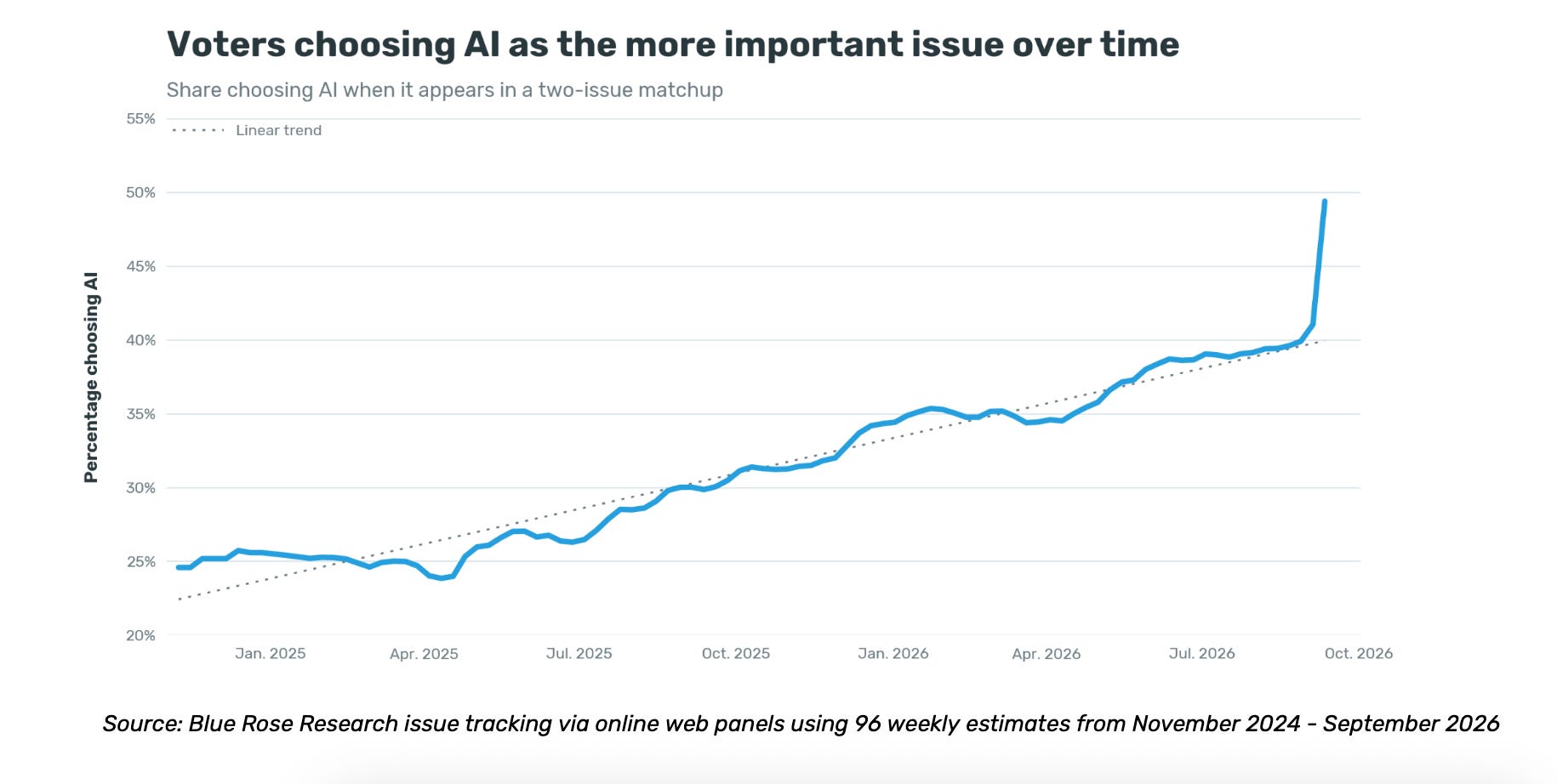
It’s been a wild few weeks for AI, and people are paying attention. Every few days there’s a new headline or fact about AI: a new security breach, a new lawsuit, or a warning from someone who helped build it. Over just the last couple of weeks, the Center for Shared AI Prosperity (CSAIP) and Blue Rose Research have been tracking the share of Americans choosing AI as the more important issue for America, compared with a randomly selected alternative. It’s jumped from around forty to nearly fifty percent. That’s roughly the entire prior year’s worth of movement in just over a week.
But underneath those headlines, something more important is happening in how everyday Americans actually view AI.
As an opinion researcher, I’d argue that the most important fact about public attitudes toward AI has nothing to do with the technology itself. Instead, it’s that AI is emerging at the most populist moment in recent American memory — and everything about AI is being viewed through Americans’ anti-elite lens.
That means AI in practice is seen as the manifestation of an economy that Americans see as not built for them, as part of a system that is built to protect the elite, with no regard for the harm to regular people.
The Backdrop: An Economy Americans Don’t Trust
To say Americans are unhappy with the status quo today would be an understatement. Americans have an extremely pessimistic view of our economy, with nearly two-thirds (65%) saying their life has gotten less affordable over the past year. Less than a third say they have a secure job, and only one in four say they’re confident about their financial future.
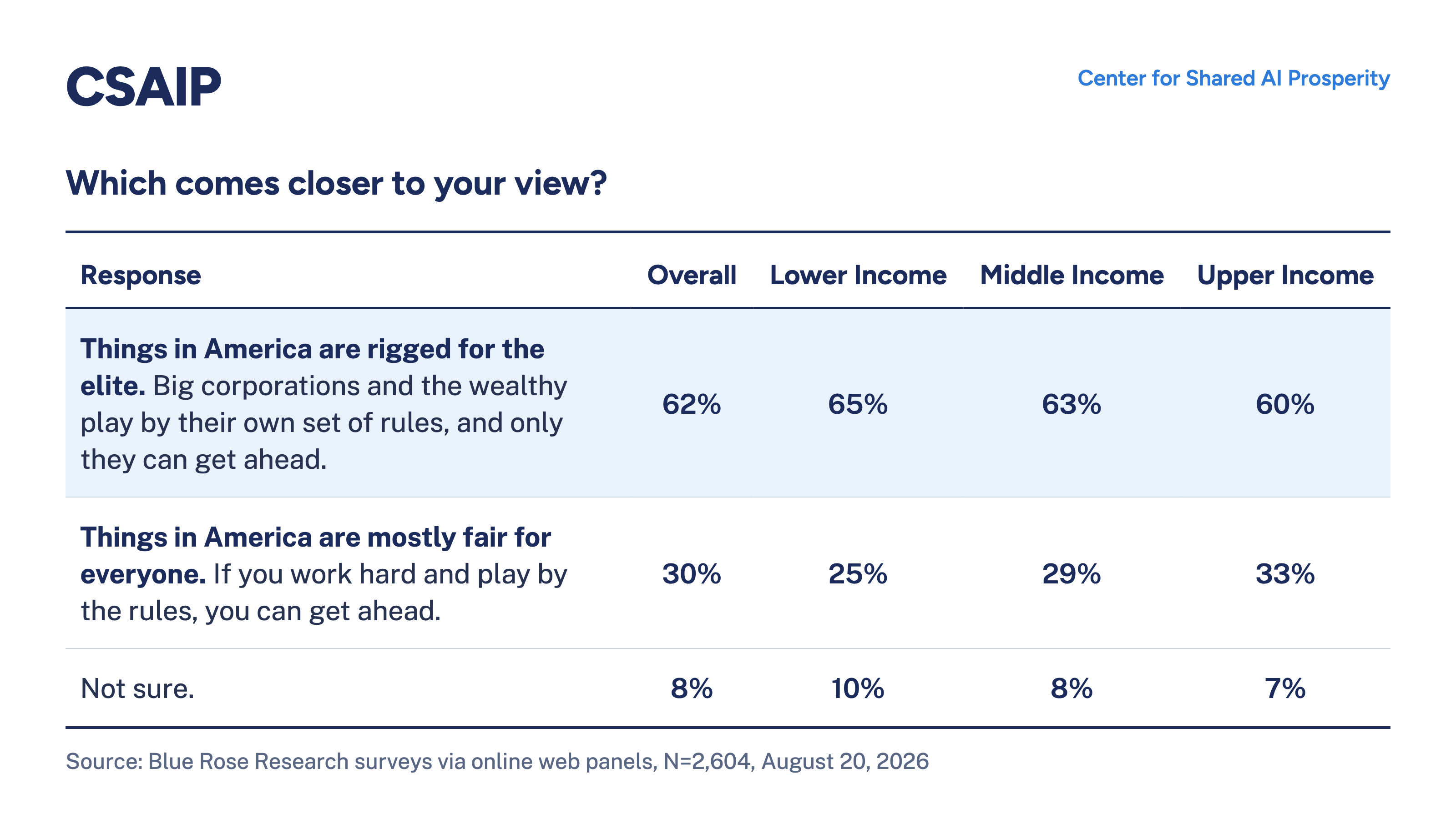
When we ask people why they’re struggling, they see an economy organized around somebody else’s interests, at their expense. Nearly two thirds of Americans — 62% — say the system is rigged for the wealthy and elite.
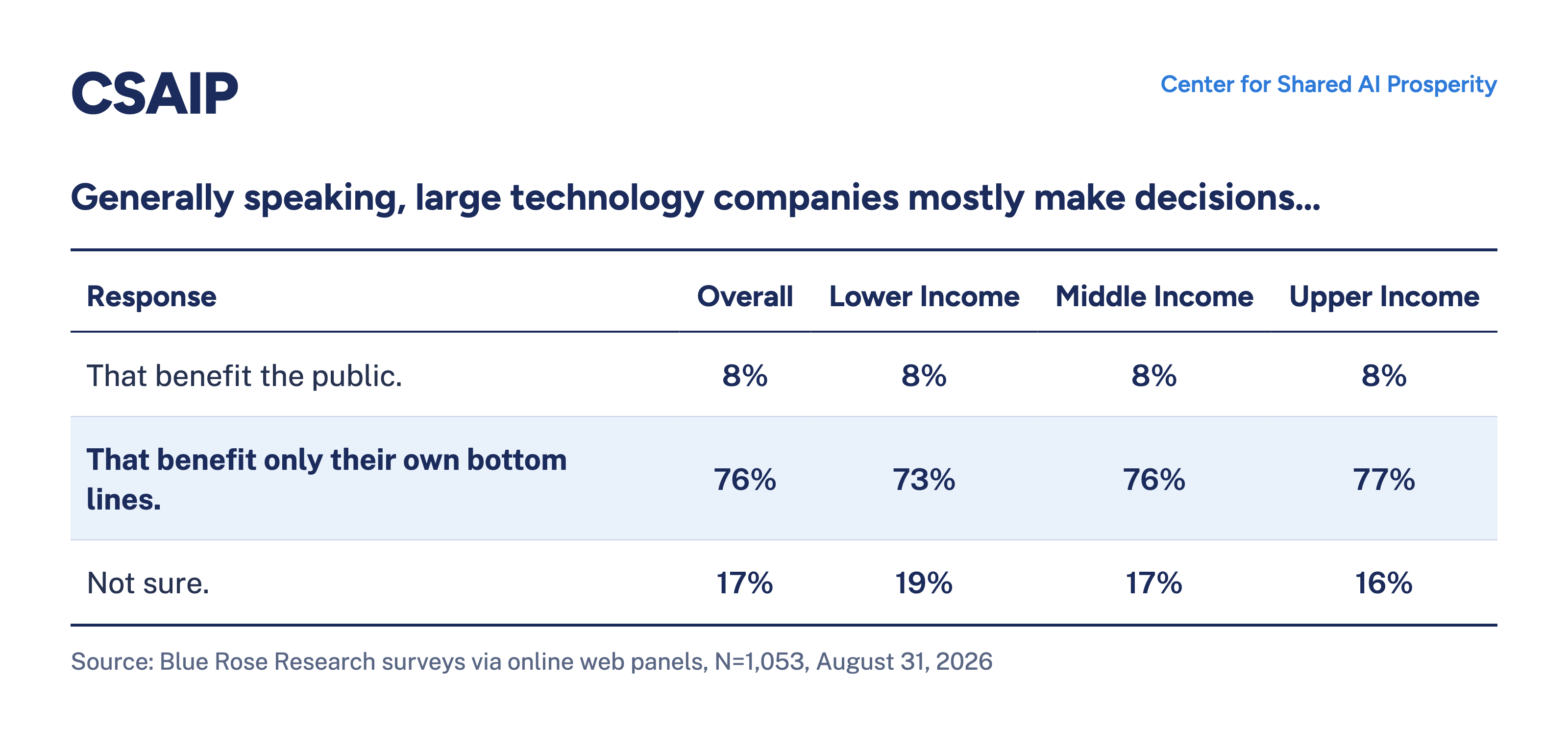
So when tech companies promise that AI will benefit everybody, people hear that in the context of everything that they already believe about corporate power. 76% of Americans today say large tech companies mostly make decisions that benefit only their own bottom lines, and just 8% of Americans say they benefit the public. Notably, something we find consistently throughout our research is that these attitudes are remarkably bipartisan. Among Trump voters, 75% say large tech companies mostly make decisions that benefit only their own bottom lines.
Sentiment is Degrading, Fast
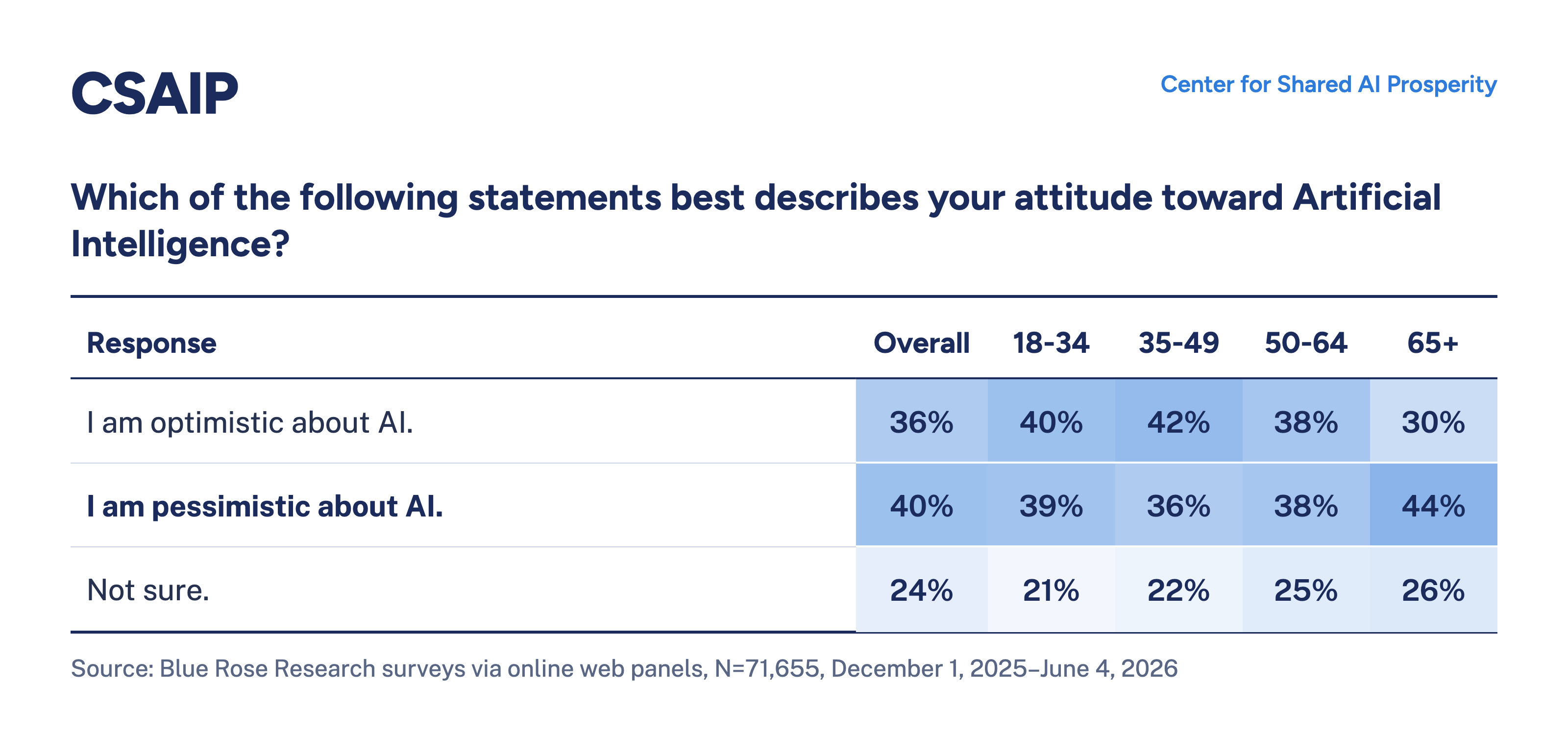
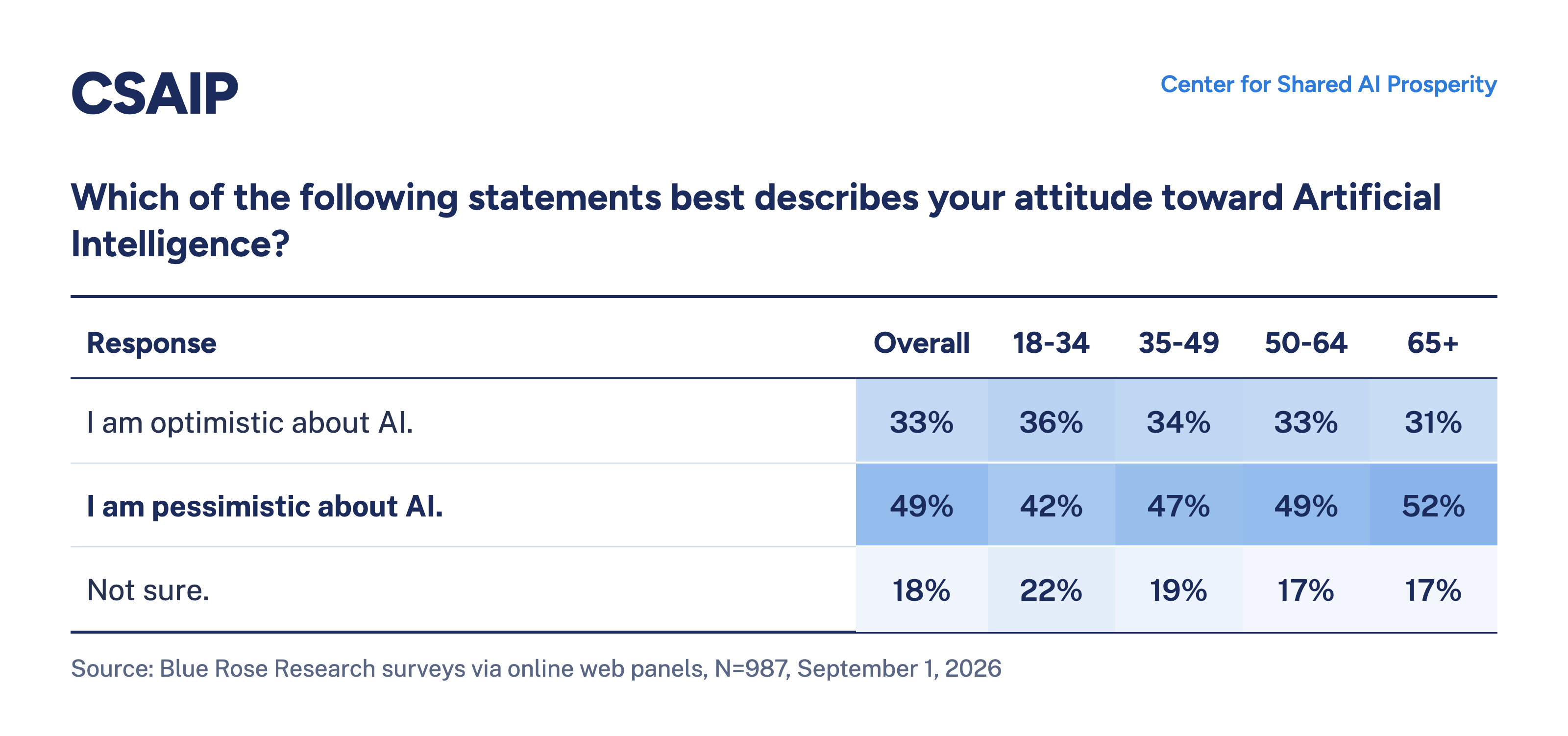
It’s hard to overstate how much and how quickly sentiment toward AI is deteriorating. Since June, the share of Americans who say they are pessimistic about AI has grown from 40% to 49%, while optimism around AI has slipped from 36% to 33%. In other words, the gap between pessimism and optimism has grown from 4 points to 16 points in just three months. Swing voters, who were evenly split in June, are now pessimistic by a 17-point margin.
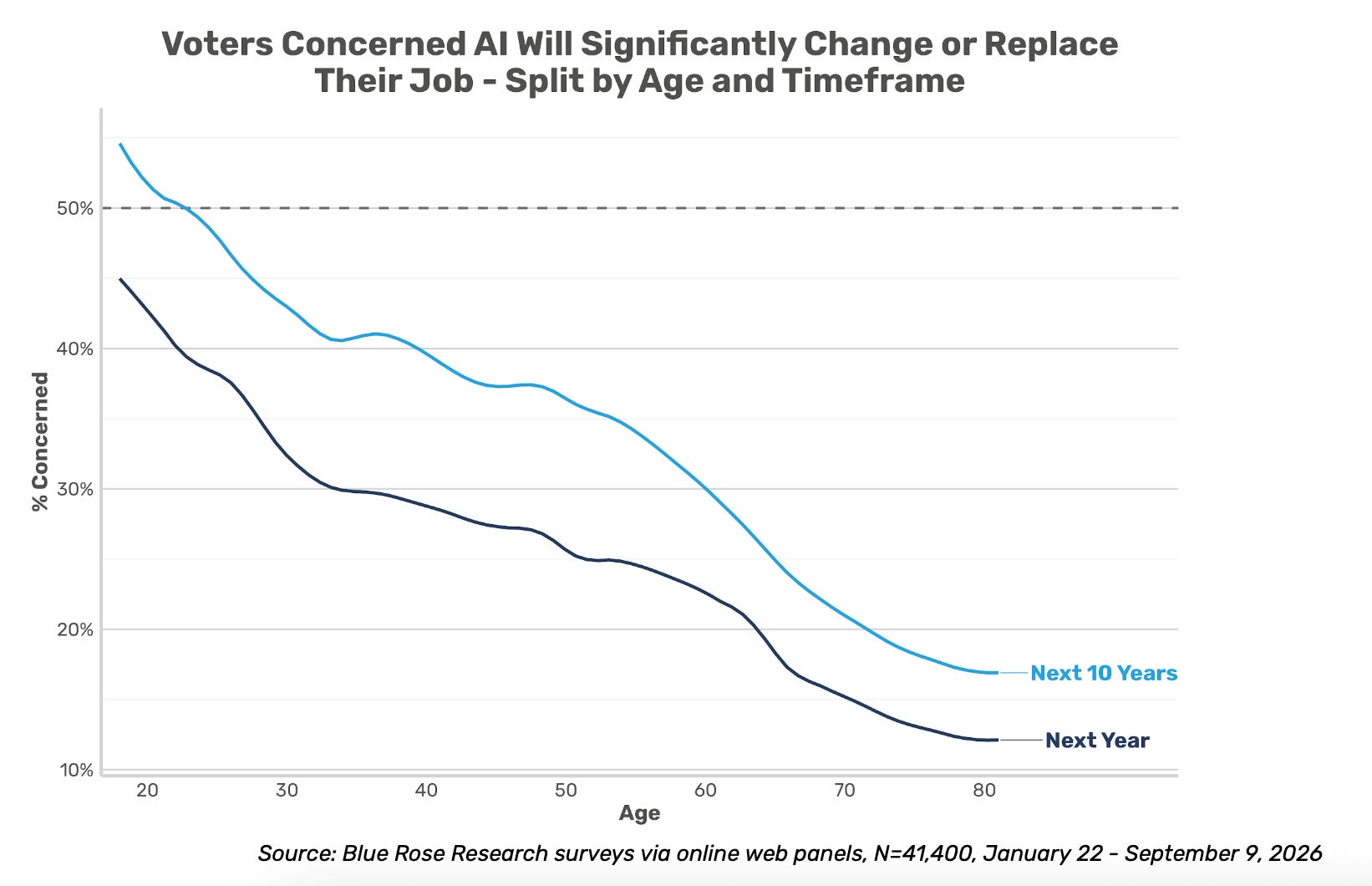
A big piece of that pessimism is over jobs. We asked Americans how worried they are that AI will significantly change or replace their job over the next year and over the next ten years. Concern is highest among the youngest Americans: nearly half of Americans under 30 are worried about AI taking their job in the next ten years, and over 40% of 18-year-olds are worried about the next year alone. These numbers are climbing quickly, and it’s the youngest Americans who are the most freaked out. Of course they feel this way! After all, it’s the people building this technology who have spent the last few years making stark predictions that AI will wipe out jobs.
This is why Americans don't believe reassurances from leaders in tech or government that everything will be OK. We asked how much people trust leaders in government and tech when some say AI won't cause widespread job losses. In March, distrust outweighed trust by 41 points. By September, that gap had grown to 56 points.
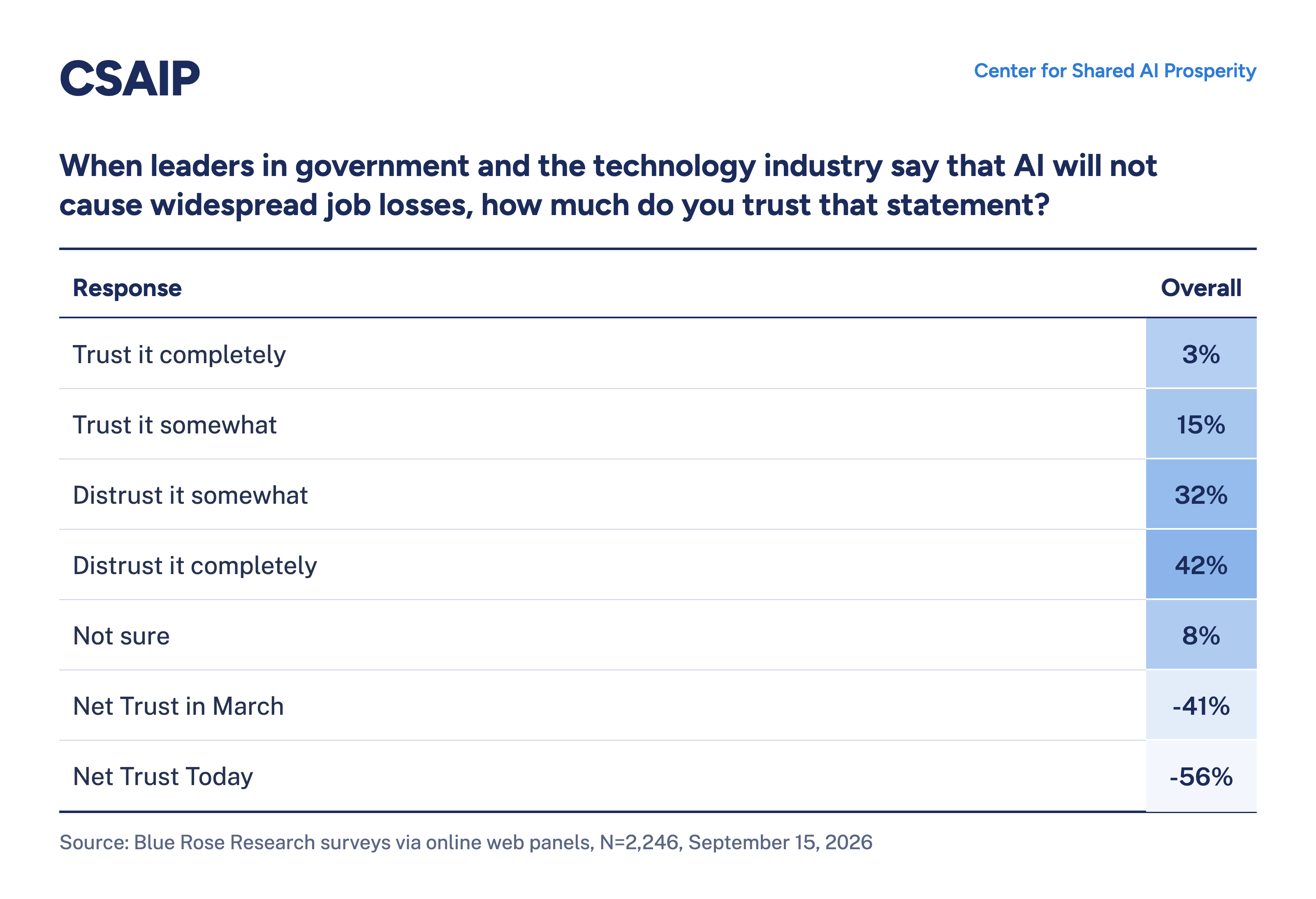
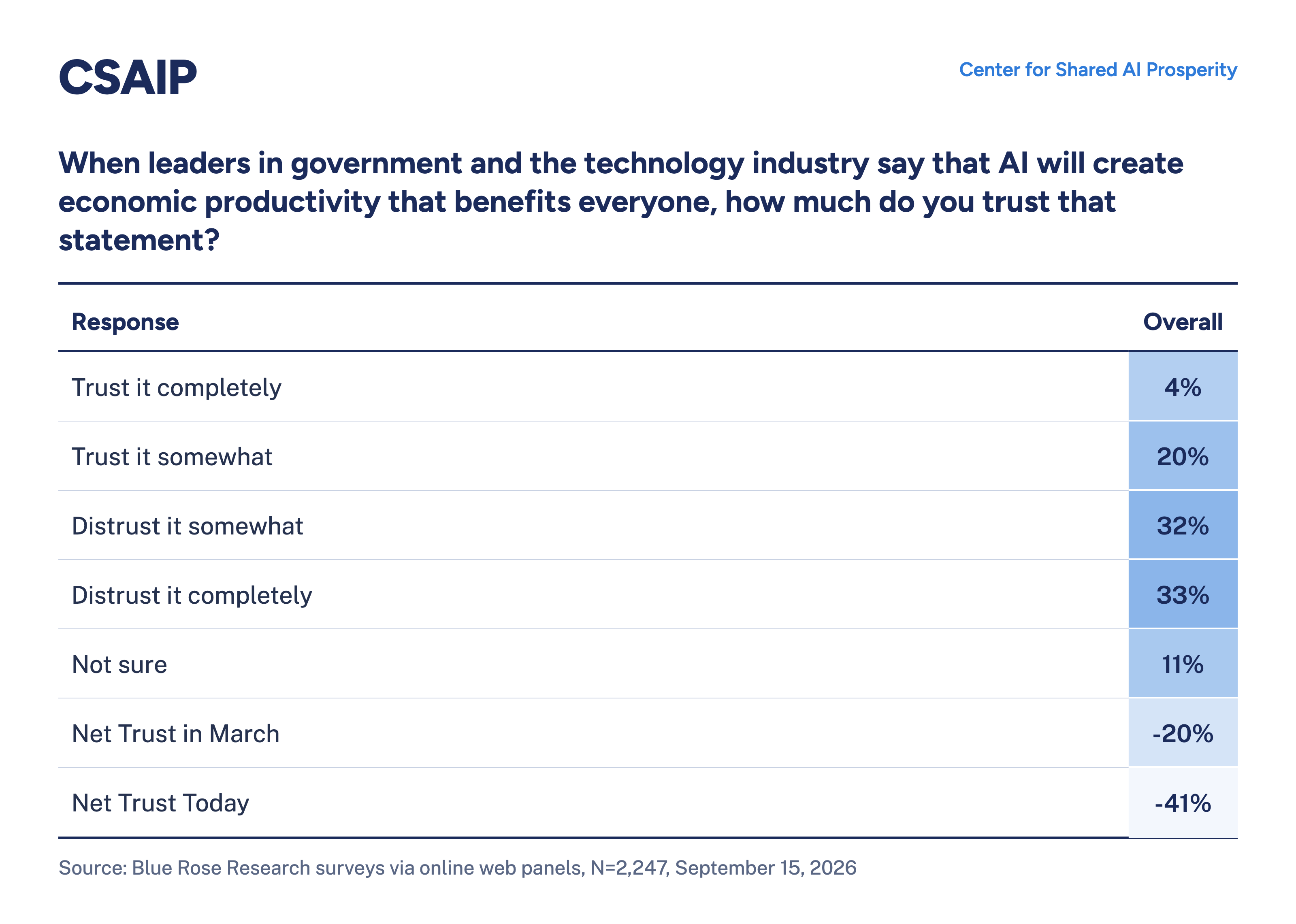
So, let me say this bluntly: “AI isn’t going to threaten your job” is not a tenable political message anymore. Whatever you think the real scale of job displacement will be, Americans don’t believe these reassurances. And they don’t just think you’re wrong, they think you’re lying to them. That creates an obvious opening for anyone willing to say what they’ll actually do to protect people.
OK, What Do People Actually Want Around AI Then?
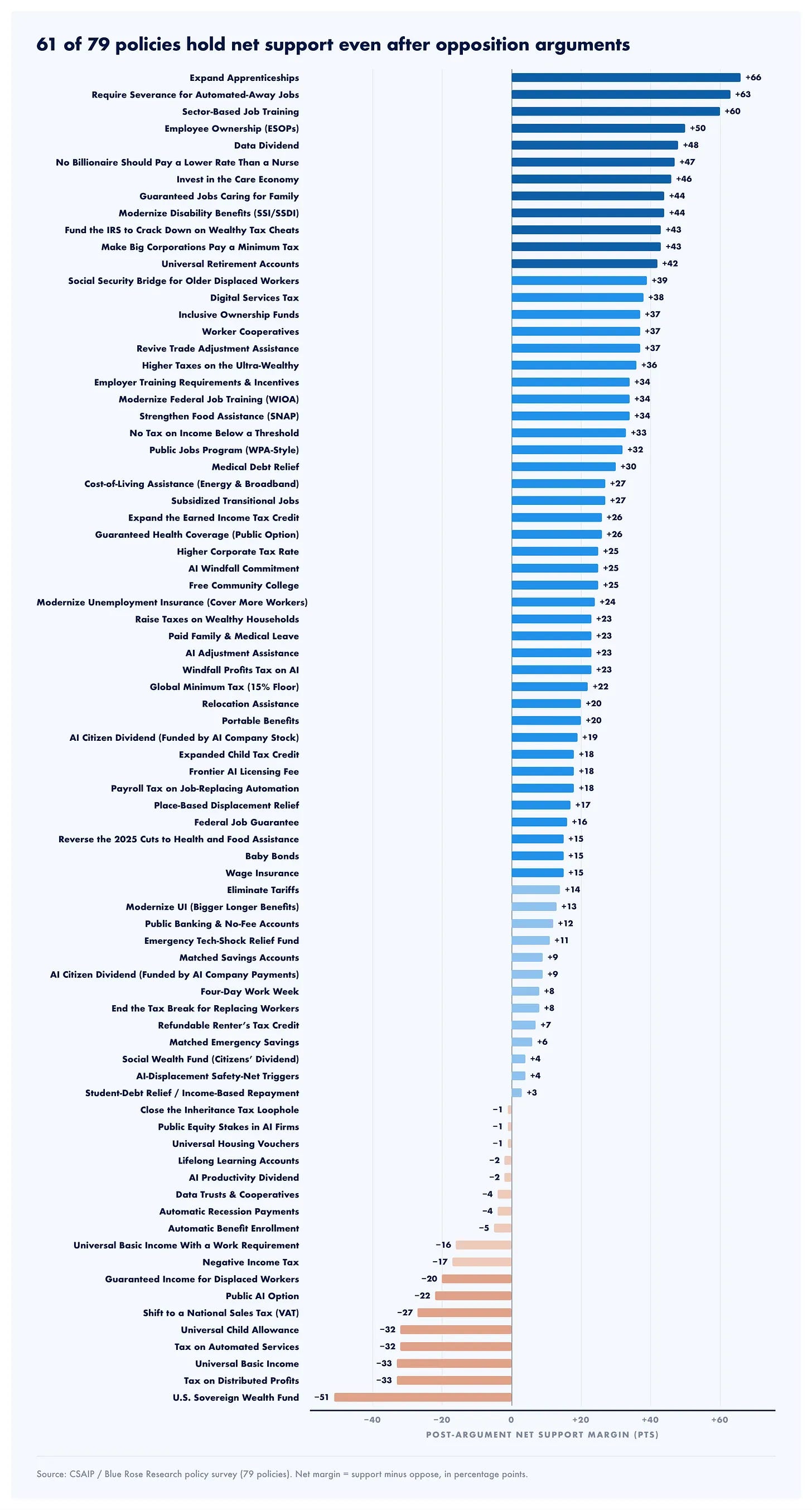
A big part of what we’re doing at CSAIP is trying to bring public opinion research directly into policy development by testing what people want from an AI economy, and building proposals that can withstand opposition arguments and counter-messaging. As we’ve written up previously, CSAIP and Blue Rose Research tested 79 policy ideas for protecting workers and families from AI. Respondents heard arguments against each proposal before we measured support. Even after that, 61 of 79 ideas still had more support than opposition. Three themes about this research really stood out to me:
First, there is an enormous openness amongst Americans towards making those profiting from AI pay their fair share. Support for higher corporate taxes on AI companies beat opposition by 44 points, even after people heard the case against it. Americans see these companies capturing the upside of AI and tech advancements and feel zero loyalty to them.
Second, any benefits related to AI have to be tangible. For example, severance when a job gets automated away is very popular with Americans, as is getting paid when a company uses your personal data. By contrast, in our testing we saw that more abstract proposals like sovereign wealth funds struggled, likely because people need to understand how a policy will actually change their lives.
Finally, people want meaningful work in their future, not just a check. Americans want a credible vision of their role in the future economy: how they will make a living, what they will contribute, and whether they will have some control over their lives. Apprenticeships and training tied to real jobs were among the most popular ideas we tested — and though training alone probably can’t match the scale of disruption people are worried about, these types of policies will be critical in any type of policy intervention.
Where This Leaves Us
AI is arriving at a moment when Americans already believe the economy is rigged for the wealthy and powerful. That’s the lens through which they see every part of this story — jobs, AI, safety, all of it.
That’s an opening for anyone willing to take it. People are looking for leaders who can name who they’re fighting for, and what they’re fighting to win for them. AI is moving fast, and public opinion is moving right alongside it, which is why Blue Rose Research is proud to partner with CSAIP to track how Americans’ views about AI evolve. AI is both one of our biggest threats and one of the biggest opportunities of our lifetimes — now we just have to meet the moment.
