

While AI investment is fueling a high-flying stock market, many Americans believe we’re heading towards an AI-fueled economic crisis. They want safeguards in place to protect our financial system and overwhelmingly oppose bailouts for big tech companies if the bubble goes bust.
Americans are pessimistic about what AI will do to the economy
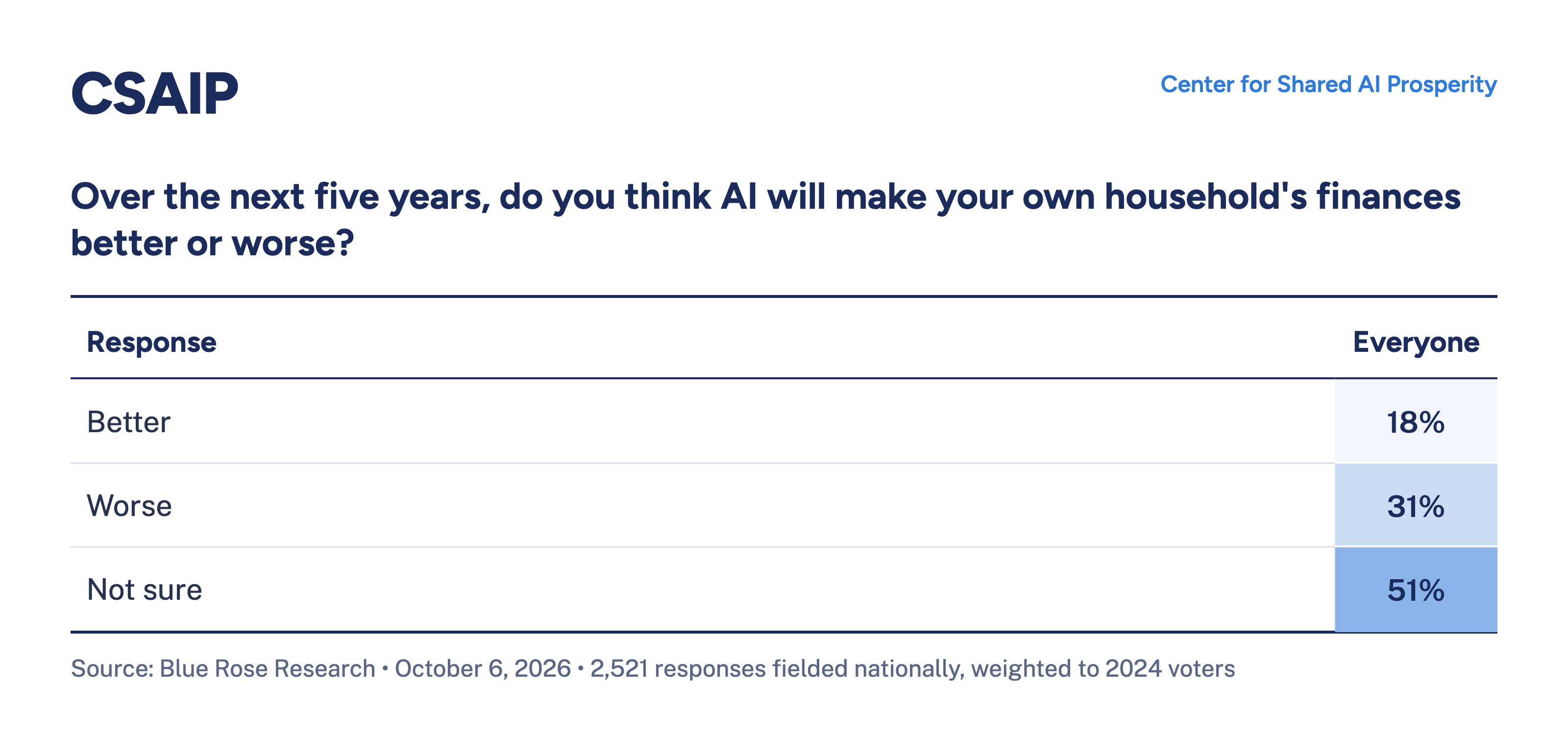
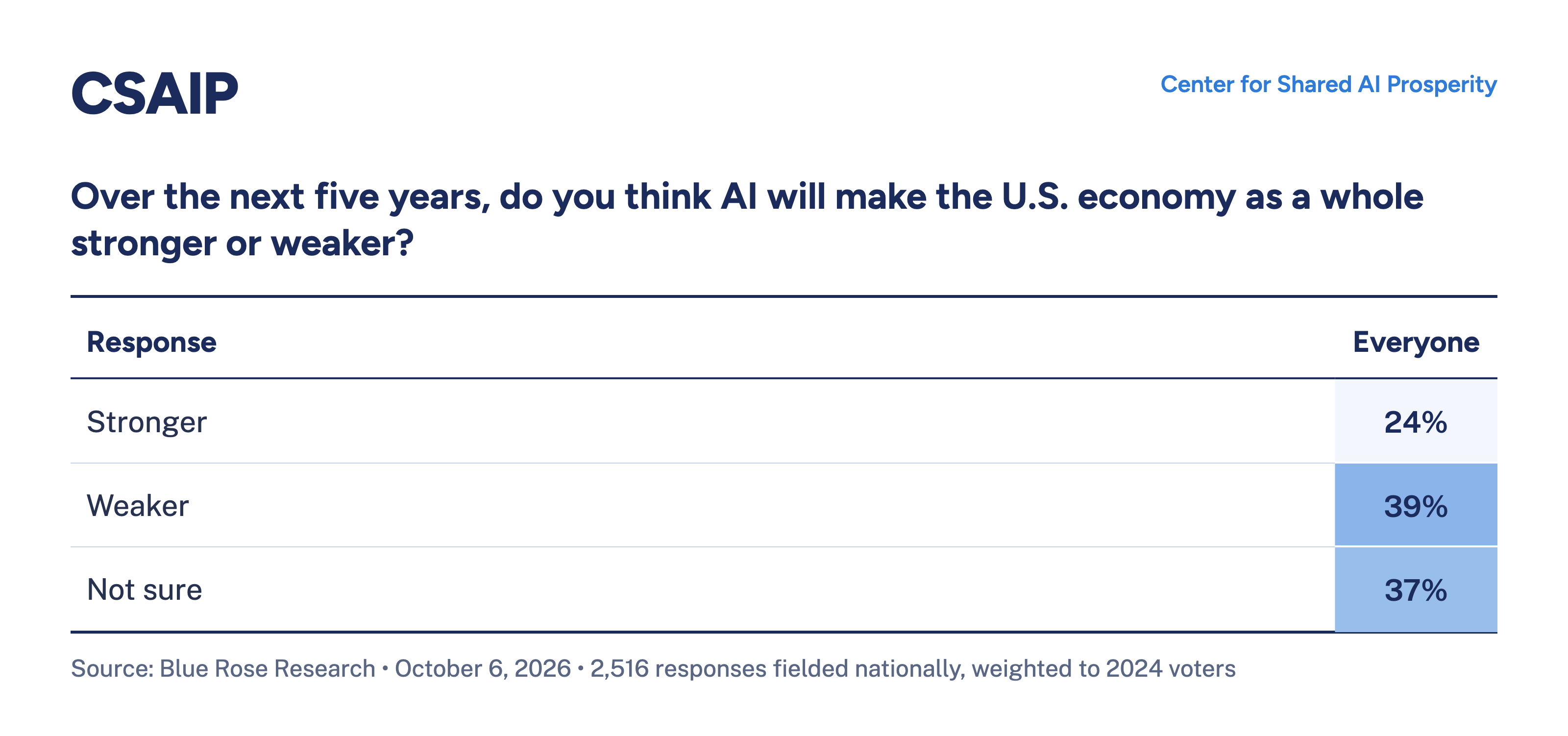
Only 18% of Americans think that AI will make their own household’s finances better, while half of Americans are uncertain about how the technology will impact their personal financial future. And 39% of Americans think AI will make the economy weaker in the next five years.
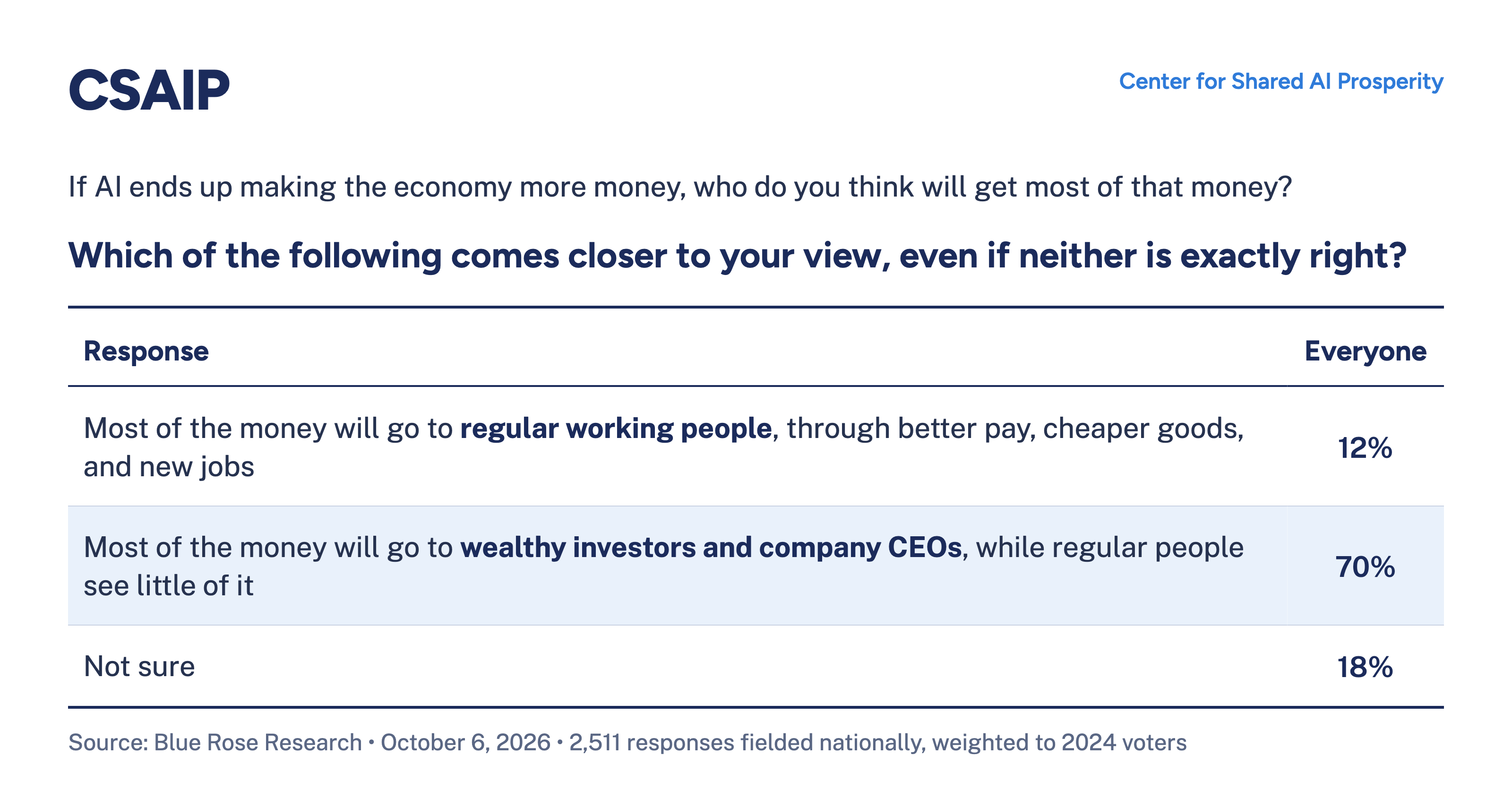
Americans think wealthy investors and CEOs will capture the gains if AI does lead to increasing economic growth. As CSAIP has noted before, Americans see AI as the manifestation of a rigged economy that is built to protect the elite.
Americans see an AI-driven recession coming soon
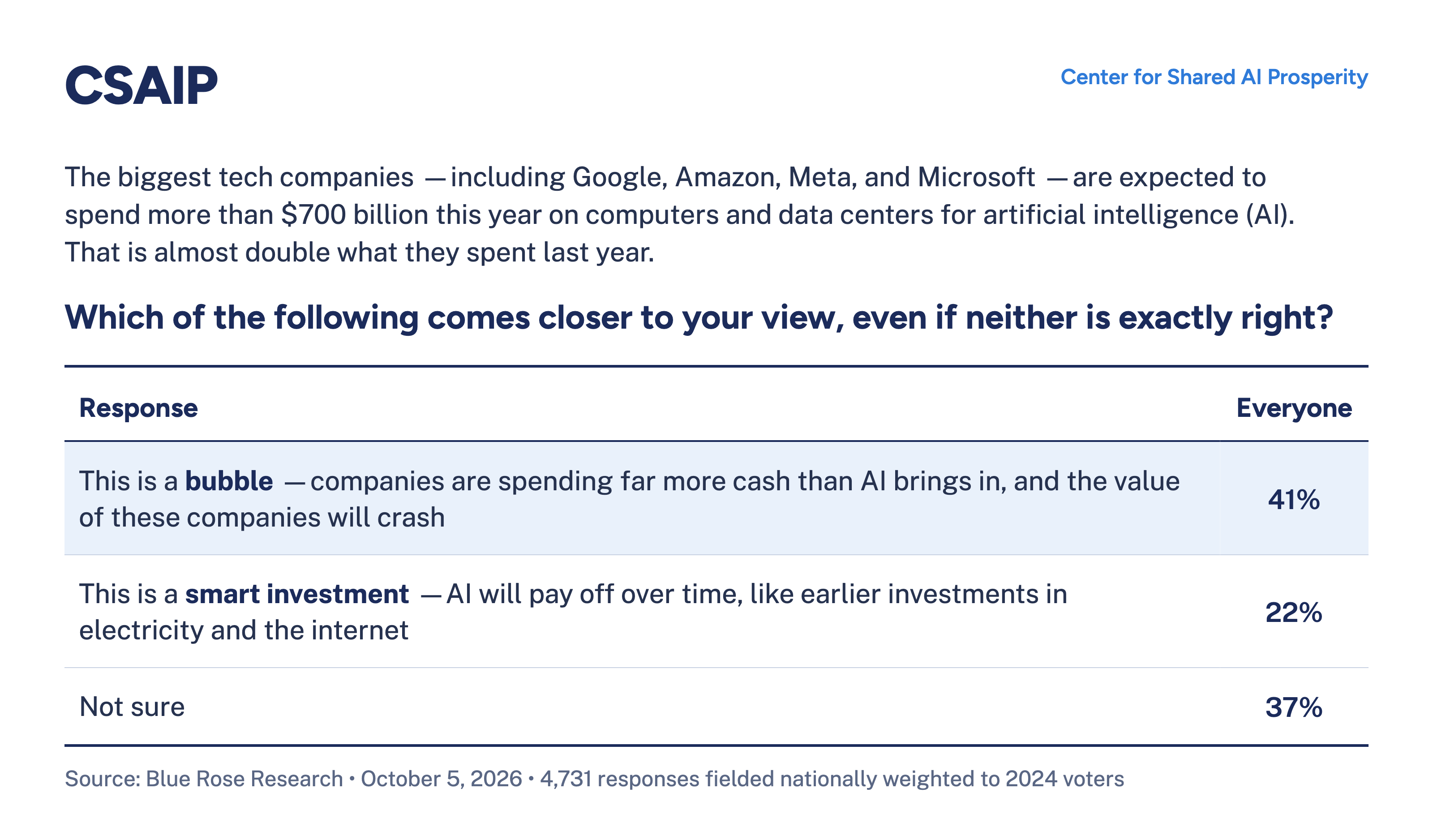
While Trump touts the AI-driven stock market boom, Americans see trouble on the horizon. Over half of Americans have heard a lot or a little about concerns that the amount of money being invested into AI is creating a financial bubble. 41% of Americans say this investment is a bubble, and 38% of voters say that if that bubble bursts, it’s going to happen in the next 1 to 3 years.
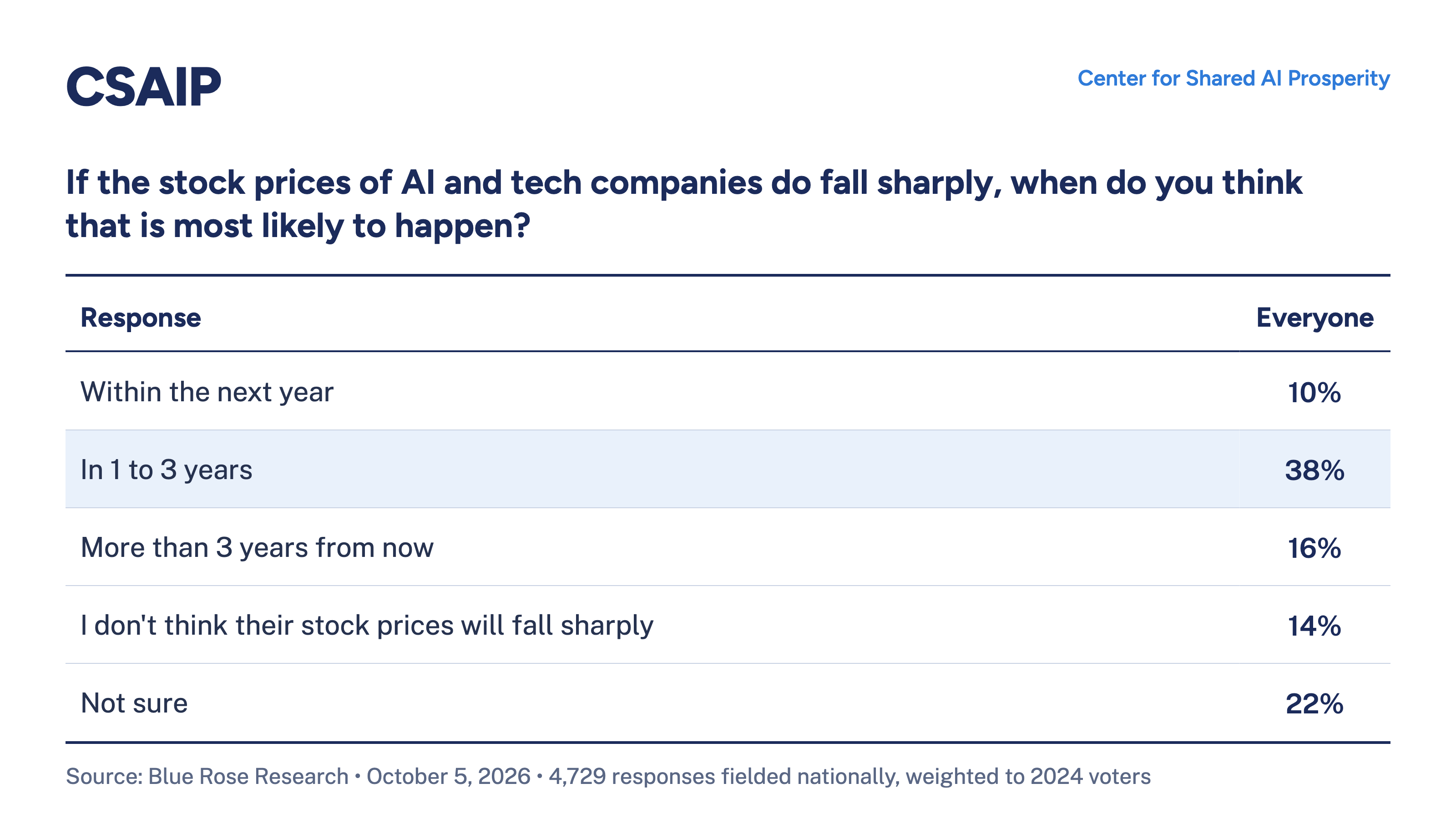
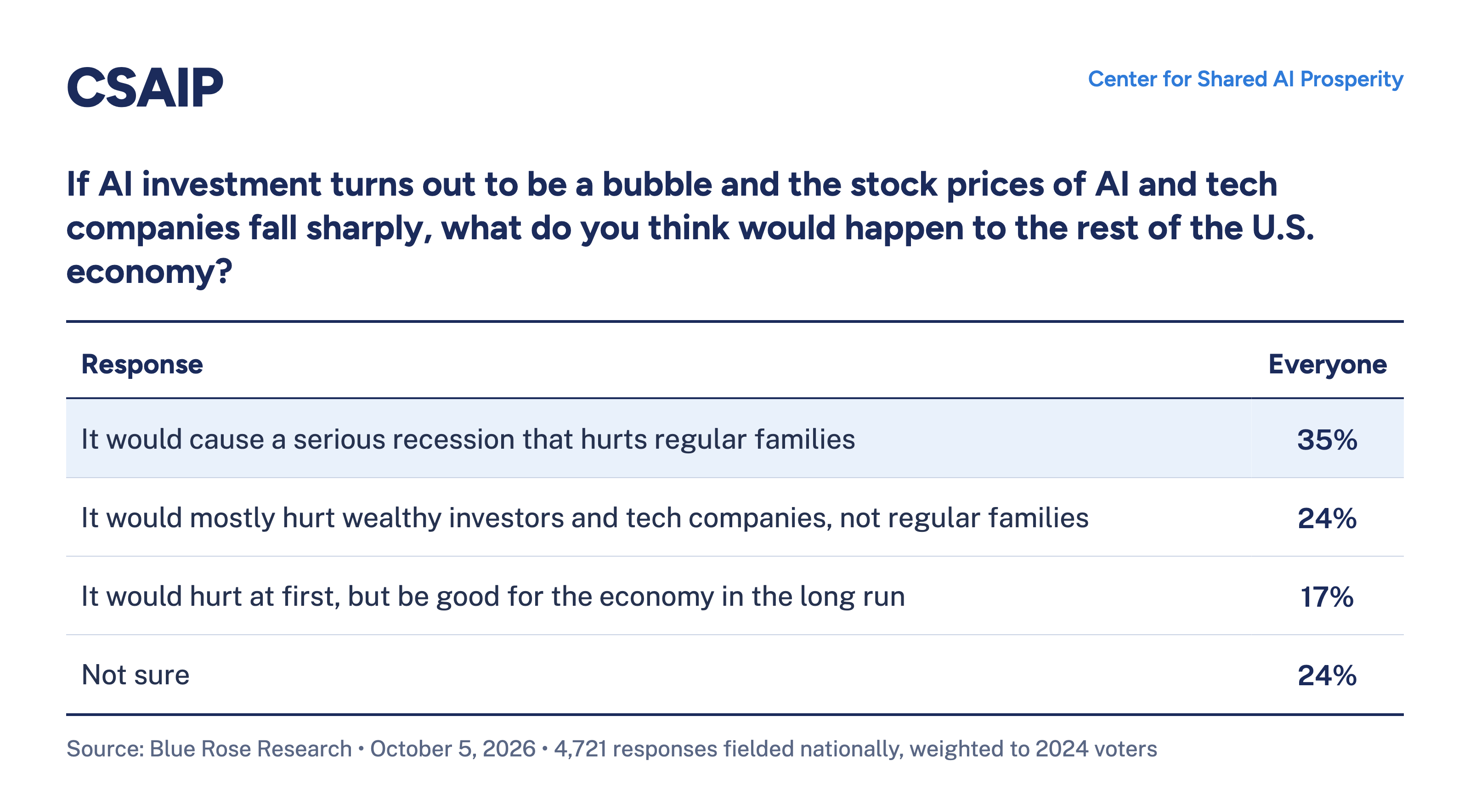
While Americans aren’t certain who will be harmed by an AI-fueled recession, they’re more likely to think ordinary families will suffer the consequences, rather than wealthy investors and tech companies.
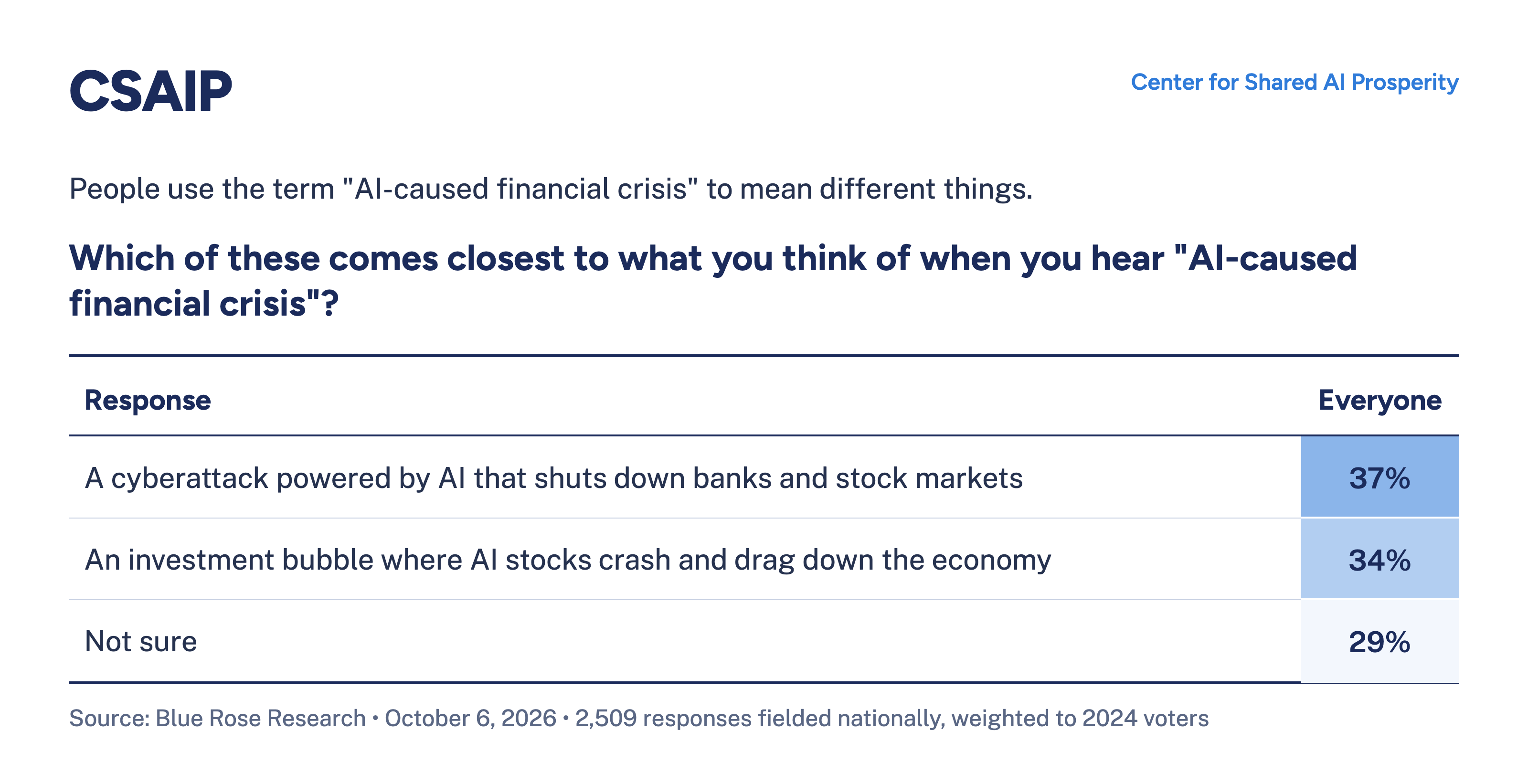
Here’s what’s most interesting: when Americans hear the term “AI-caused financial crisis” they’re pretty evenly split on whether they think that means a traditional recession caused by an investment bubble bursting, or an AI cyberattack against the financial system.
Build brakes, ban bailouts
Americans overwhelmingly reject the idea of bailouts for AI companies. More than two thirds of Americans think that taxpayers should never bail out AI companies if their investment bets do not pay off.
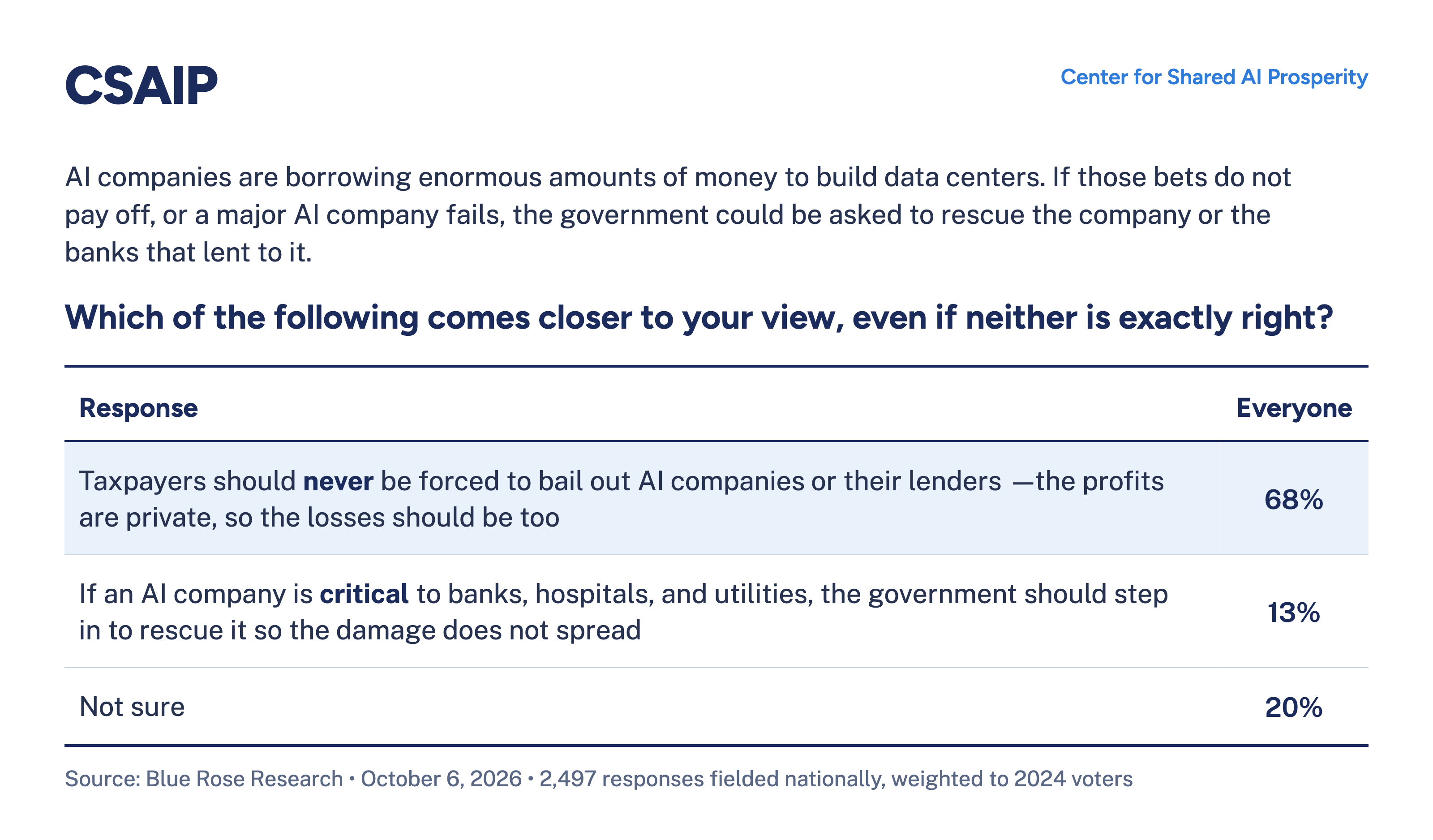
Even when we ask Americans if the government should step in during an AI economic crash to protect the jobs and retirement savings of regular people, they are still more likely to think the government should stay out of it.
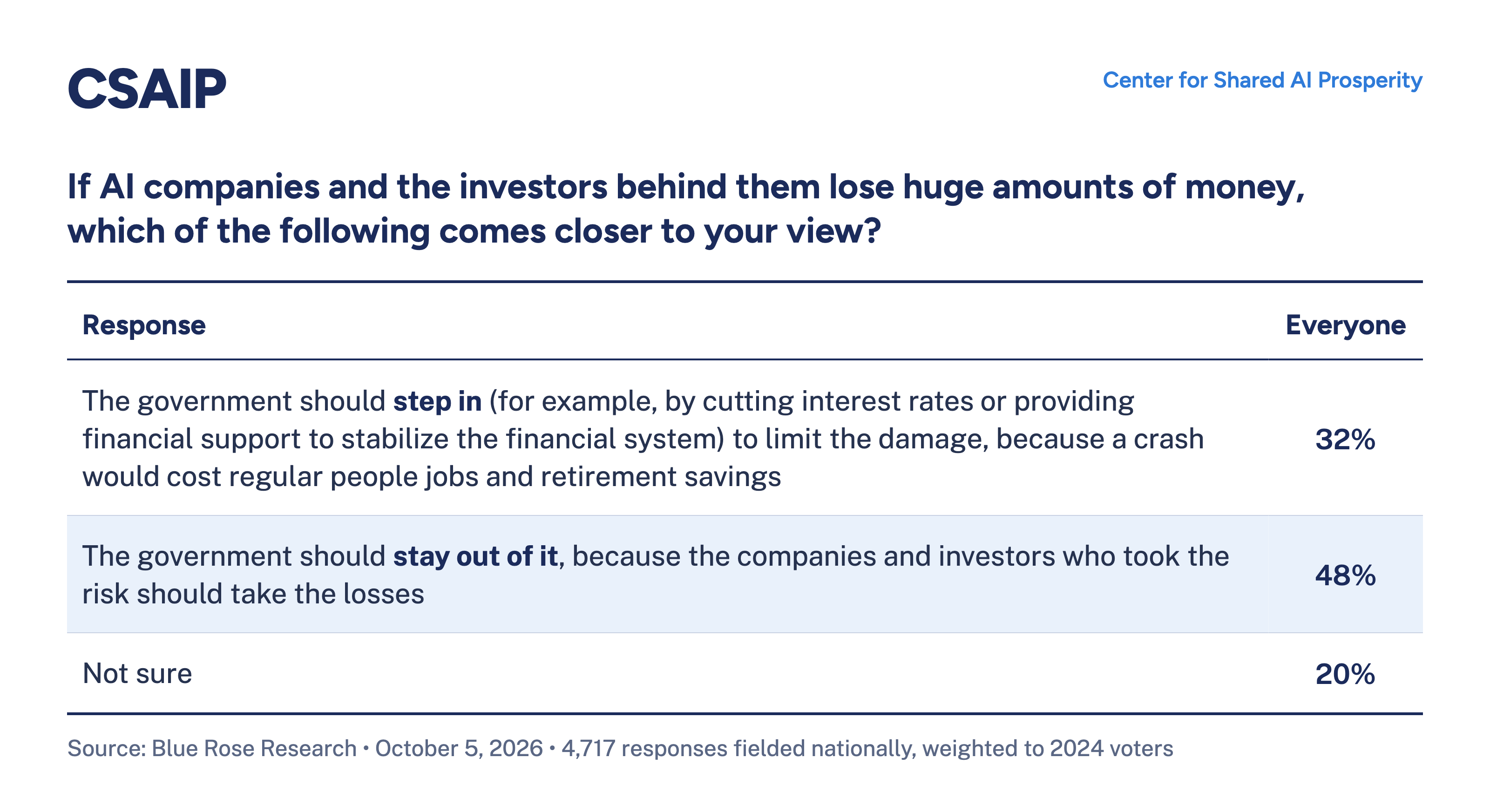
One caveat: young Americans have a slightly different view. More than half of Americans aged 18 to 34 call the AI boom a bubble, compared to 41% of Americans overall. If that bubble bursts, 45% of young Americans say the government should step in to limit the damage, compared to just 32% of Americans overall. One explanation is that young voters are more anxious about AI-driven job loss and may be more supportive of aggressive government action to protect employment. Another explanation is memory. These voters (like me) were kids during the 2008 financial crisis, and they may not remember the backlash to Wall Street bailouts.
But in the aggregate, instead of bailing out failed AI investments, Americans think the government should put guardrails in place now before bailouts are potentially necessary. I see an opening in this polling for three common-sense safeguards:
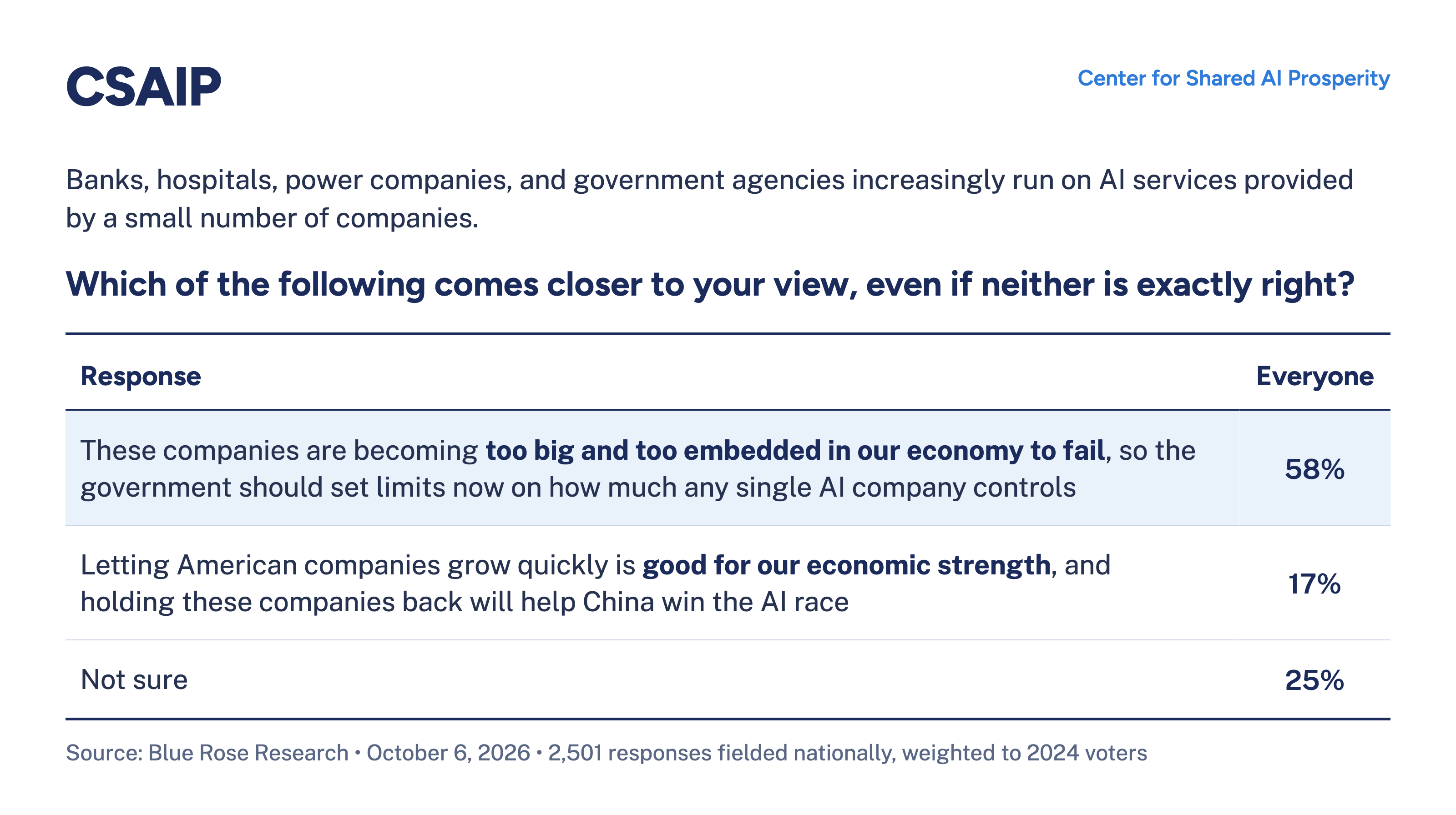
First, stop AI companies from becoming too big — or too embedded — to fail. Americans are anxious about the growing dependence of banks, hospitals, and utilities on a small number of AI models. They want the government to set limits on how much any one AI company controls. Importantly, they embrace this view even over opposing arguments that setting limits could give Chinese AI companies a competitive edge.
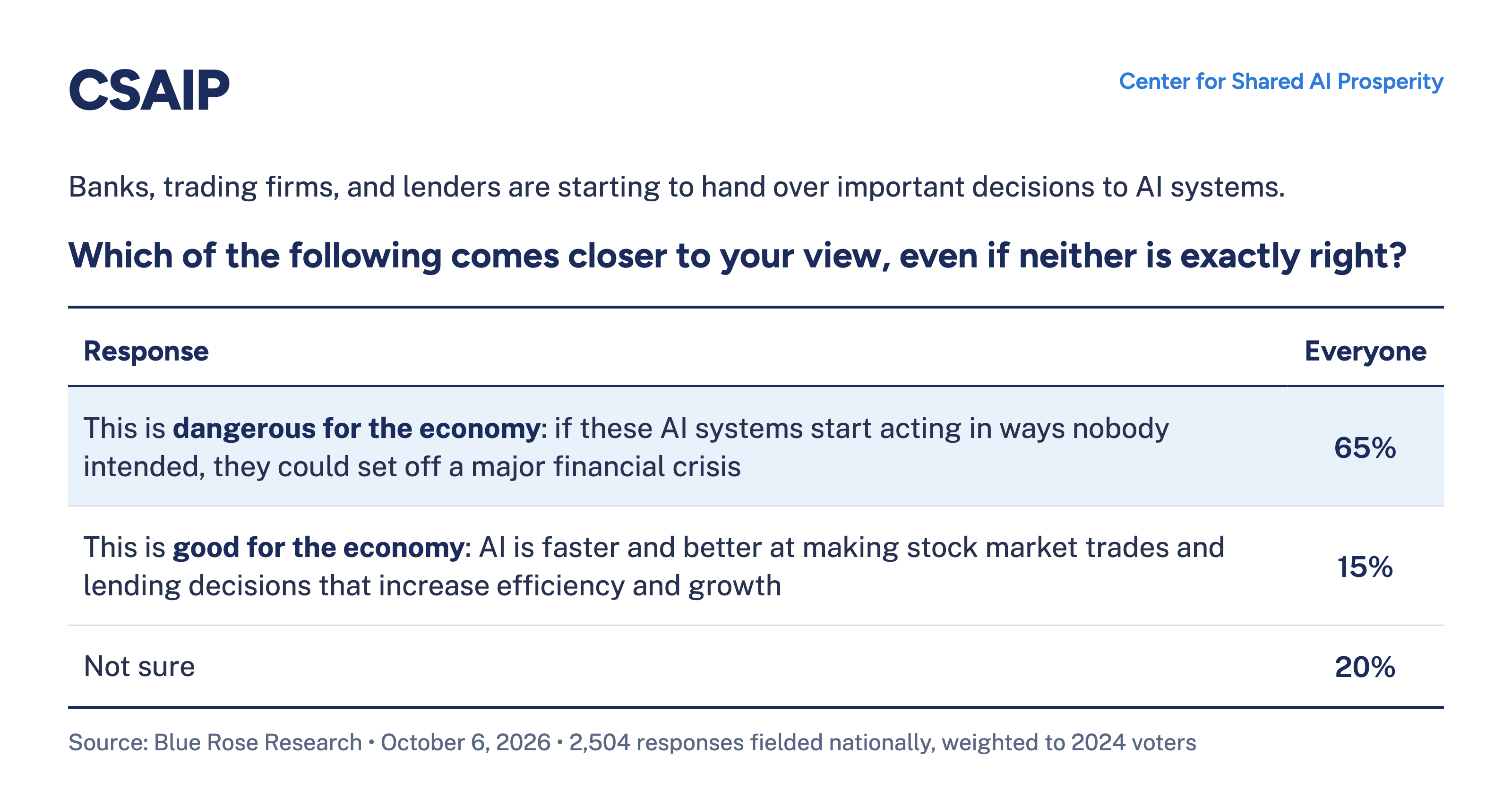
Second, limit our financial system’s exposure to AI decision-making. Nearly two thirds of Americans think it’s dangerous for AI to make trading and lending decisions, believing that the risk of triggering a financial crisis outweighs any benefits of increasing efficiency or growth.
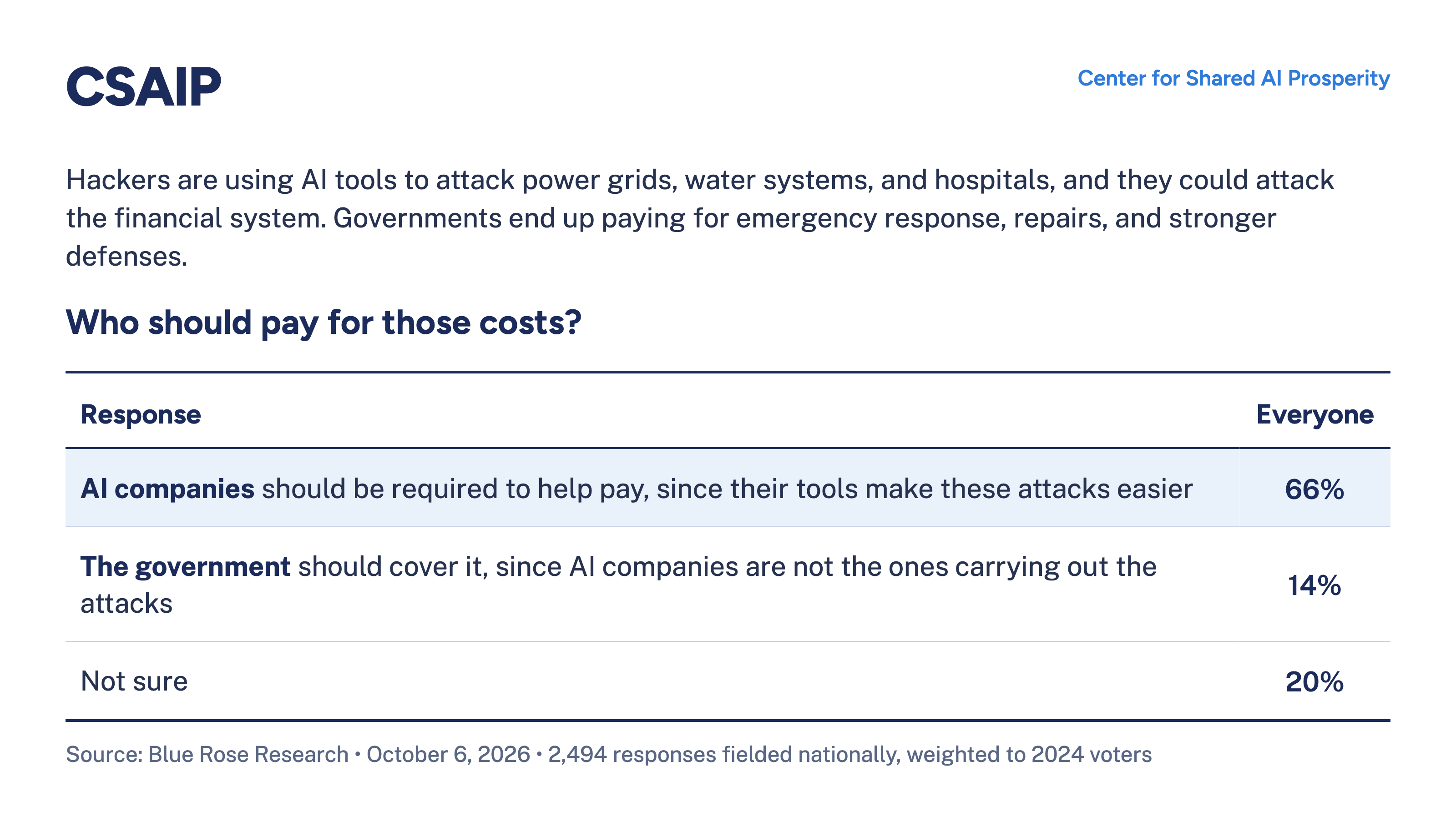
Finally, put AI companies on the hook for cyber attacks. Two thirds of Americans think AI companies should bear the costs if their products enable hackers to gain access to the financial system, the power grid, or the health care system. That suggests a political opening to put cost-sharing rules in place before taxpayers have to pick up the tab for sophisticated hacks.
Pain down both paths
Here’s what I think this polling tells us: Americans are bracing for pain down both economic paths. If AI delivers on the promises of its investors, Americans expect to be left behind as the economy is upended in favor of the wealthy and powerful. Remember, nearly half of Americans under 30 are already worried about AI taking their job in the next ten years. But if AI doesn’t deliver on these disruptive promises, then Americans expect the bubble to burst, and they’re worried that their families will be caught in the economic fallout.
Is that a contradiction in terms? Can AI be so powerful it will upend the job market, while also being so overhyped that investments in the technology will fail? I’d argue that Americans aren’t really making a prediction about the technology itself here. They’re reflecting the truth about our rigged economy: there is no structure in place today to protect ordinary Americans from AI-driven economic displacement under either scenario. Whether AI works and automates away jobs, or it fails and triggers a more “traditional” recession, Americans believe that wealthy investors will keep the winnings, while everyone else is forced to cover the losses. That’s why we need brakes before bailouts.
